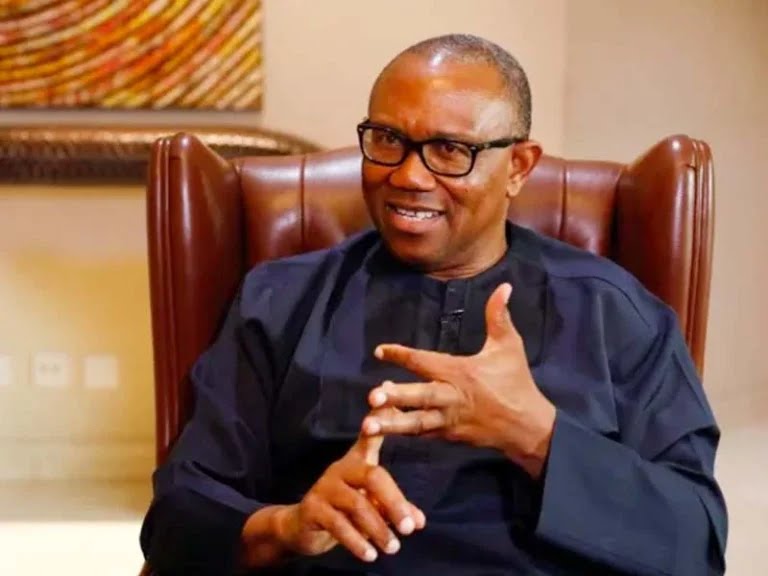
National Democratic Party presidential candidate Peter Obi has accused the Federal Government of presiding over a deepening education crisis, insisting that weak leadership and chronic underfunding – not policy design – are to blame for poor learning outcomes across the country.
Obi was reacting to the government’s decision to phase out the policy separating junior and senior secondary schools after the Minister of Education, Dr Tunji Alausa, admitted that the arrangement had failed to deliver its intended results.
In a detailed statement, Obi argued that the government’s admission amounted to a confession of long-running mismanagement of a sector that should be central to Nigeria’s development agenda. He pointed to recent examination results as evidence of systemic failure, noting that only 38.32 per cent of candidates passed both English Language and Mathematics in the 2024 West African Senior School Certificate Examination, while about 32 per cent passed the computer-based WASSCE in 2025.
According to him, these figures reveal a structural crisis rather than a mere policy misstep. He stressed that education is the backbone of human capital development and warned that Nigeria cannot escape economic stagnation while neglecting schools, healthcare and job creation for its growing youth population.
Obi criticised the Federal Government’s budgetary priorities, highlighting that education received ₦3.52tn in the 2026 budget, about 6.17 per cent of total spending – far below UNESCO’s recommended 15 to 20 per cent. Such low investment, he said, shows that policymakers do not truly see education as a driver of long-term growth.
He also condemned reports that Nigeria failed to sponsor students to international science competitions due to lack of funds, contrasting this with what he described as generous spending on delegations to non-essential conferences abroad.
Obi insisted that the JSS/SSS structure is not the root of the problem. Instead, he blamed the government’s inability to properly fund, manage and monitor schools, calling the minister’s remarks a reflection of “a broader failure of public leadership.”
Drawing on his tenure as governor of Anambra State, Obi said his administration demonstrated that focused investment in infrastructure, technology and oversight could rapidly improve outcomes. He recalled large-scale provision of laptops, power supply and internet connectivity to secondary schools, a programme he said earned recognition from HP Africa for its scale.
Obi urged the Federal Government to urgently reorient spending towards education, warning that continued neglect would have severe long-term consequences for the country’s stability and prosperity.