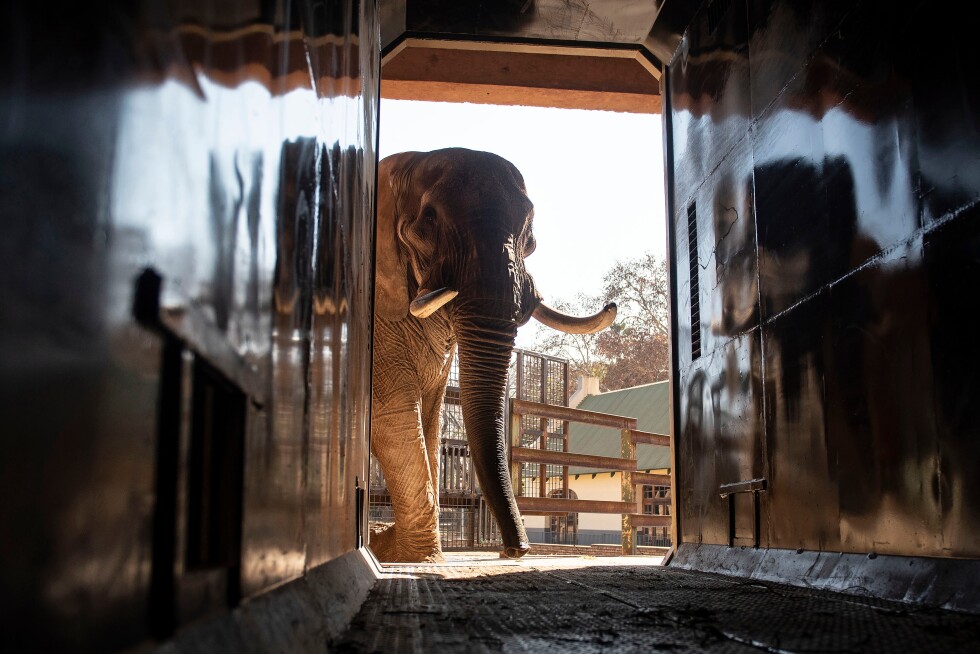
The emotional lives of three elephants at Johannesburg Zoo have become the focus of a groundbreaking court case that could redefine how South Africa treats wild animals in captivity.
Animal welfare organisations, led by Animal Law Reform South Africa and supported by international elephant specialists, argue that Lammie, Ramadiba and Mopane are showing clear signs of psychological distress. They want the court to order their relocation to a spacious, semi-wild conservation park where they can live in a larger social group and roam more freely.
The case asks judges to rule on whether the state and the city-owned zoo are fulfilling their constitutional and legal duties to protect animal welfare. Lawyers for the groups say South Africa’s Constitution, together with national welfare laws, imposes a direct obligation on authorities to prevent unnecessary suffering, including mental anguish.
Expert affidavits submitted to the court describe elephants as highly intelligent, socially complex animals that naturally live in herds of dozens, communicating over long distances and travelling vast ranges. In contrast, Lammie, Ramadiba and Mopane are confined to an enclosure said to be little larger than a soccer field, with limited environmental enrichment and no opportunity to form a natural herd.
Observers report stereotypic behaviours often associated with captivity-induced trauma, such as repetitive rocking, swaying and long periods of listless standing. Welfare advocates interpret these as symptoms of depression, frustration and chronic stress.
Johannesburg Zoo rejects the criticism, insisting the elephants are healthy, closely monitored and cherished by keepers and visitors. In statements, zoo officials have accused campaigners of fuelling a “media scourge” and argue that translocating elephants from long-term captive settings to sanctuaries can be risky and, in some cases, harmful.
Activists counter that successful relocations are possible when carefully planned. They point to the transfer of Charley, an elderly bull elephant moved from another South African zoo to a game reserve after he was left alone and deemed lonely by experts. Charley, who had spent years in a circus before his zoo life, was allowed to “retire” in more natural surroundings.
The court’s decision in the Johannesburg case is expected to resonate far beyond one zoo, potentially setting a precedent for how emotional suffering in captive wild animals is recognised and remedied in South African law.