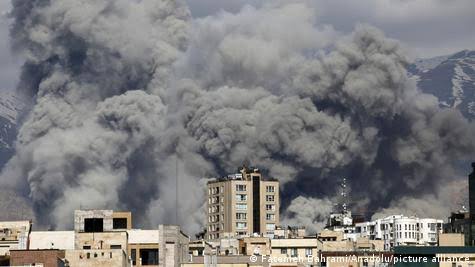
Gulf Arab governments have issued a sharp collective rebuke of Iran after a wave of strikes on Bahrain, Kuwait and Jordan, warning that the attacks risk tipping an already volatile region into a wider confrontation and disrupting vital global energy flows.
Meeting in Manama, foreign ministers of the Gulf Cooperation Council denounced what they called brutal Iranian aggression against three US-aligned states that host American forces and serve as key logistical hubs for Western militaries. The ministers said the strikes hit infrastructure, economic facilities and residential districts, causing significant casualties and damage.
Bahraini Foreign Minister Abdullatif bin Rashid Alzayani said the attacks were designed not only to pressure governments hosting US troops but also to send a message about Iran’s ability to threaten critical economic assets across the Gulf. He warned that such actions directly undermine efforts to build confidence and reduce tensions among neighbouring states.
The ministers voiced particular alarm over the effective closure or severe disruption of traffic through the Strait of Hormuz, the narrow chokepoint at the mouth of the Gulf through which a substantial share of the world’s seaborne oil and liquefied natural gas passes. Any prolonged interruption there, they cautioned, would reverberate through global supply chains, drive up energy prices and strain already fragile economies.
The GCC session unfolded against the backdrop of a dangerous tit-for-tat cycle between Washington and Tehran. US forces carried out airstrikes on Iranian-linked targets, prompting retaliatory fire on territories where American troops are stationed. The exchanges have tested a fragile ceasefire arrangement that had briefly reduced direct hostilities.
While the Gulf ministers condemned Iran’s actions, they also sought to project a commitment to diplomacy, calling for dialogue, de-escalation and respect for state sovereignty. Yet several officials questioned how meaningful regional cooperation could be pursued while missiles and drones continue to fly.
In a joint statement, the council accused Iran of fuelling instability and eroding trust at a time when Gulf states are trying to diversify their economies and attract long-term investment. Analysts in the region warn that miscalculation by any party could draw additional countries into the confrontation and place more energy infrastructure and shipping routes at risk.
For now, Gulf capitals are on high alert, reinforcing security around ports, pipelines and military bases as they watch for signs that the latest round of strikes may herald a deeper and more dangerous phase in the long-running standoff with Iran.