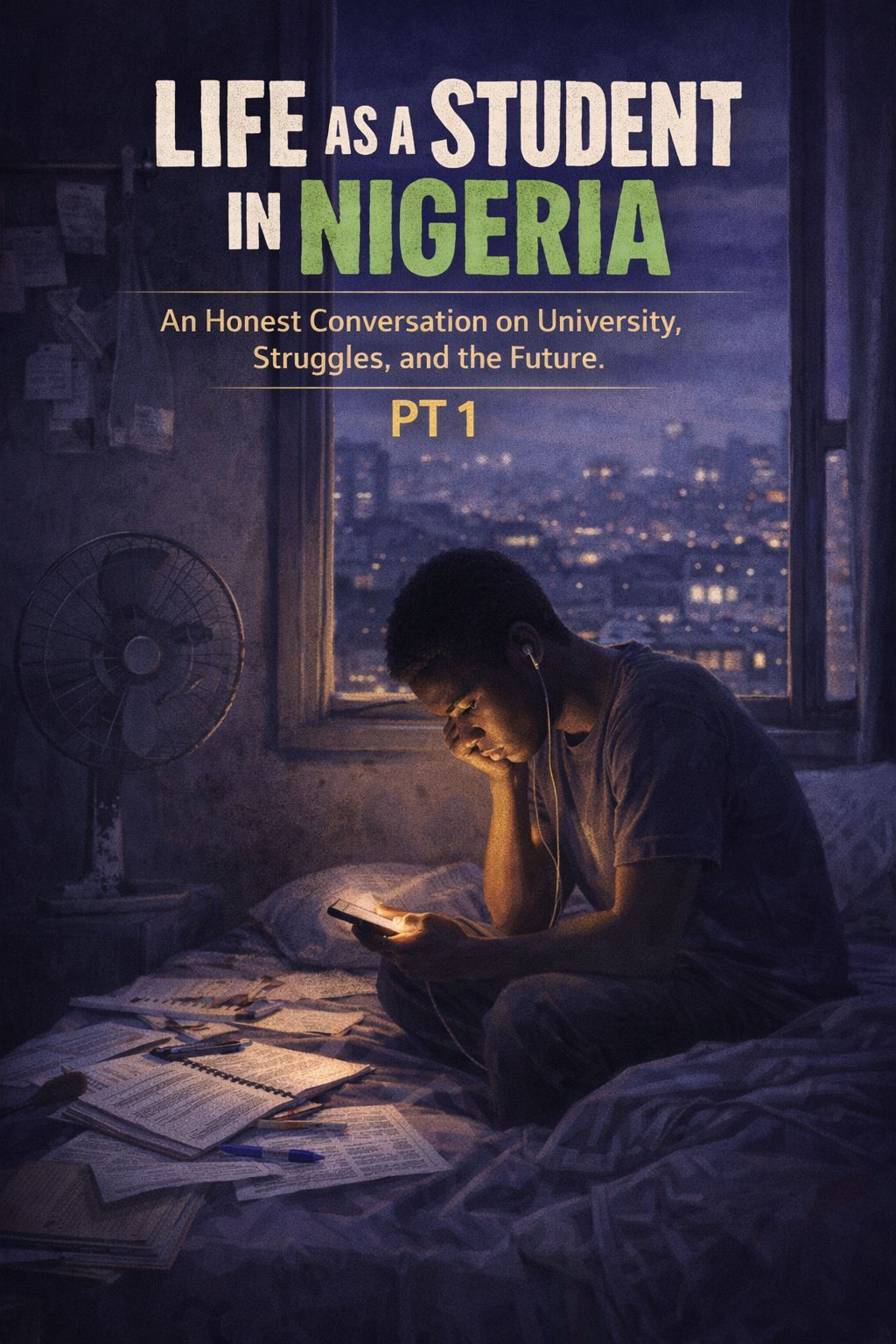
There’s a common assumption that once you get into university, you’ve figured life out or at least, you’re on the right path. But is that really the case?
To understand what it truly means to be a student in Nigeria today, I spoke with a university student whose responses were not only honest but deeply reflective. What stood out wasn’t just what he said, but how he said it, with a confidence and awareness that made every answer feel intentional.
One of the first things he emphasized is that university life is nothing like secondary school. According to him, the difference lies mostly in independence. In secondary school, there’s structure, supervision, and control; parents and teachers guide your every move. But in university, especially if you’re living away from home or in a hostel, everything changes.
You decide what to eat, when to attend classes, and how to manage your time. No one is forcing you anymore. That freedom, he explained, comes with responsibility, your actions now have direct consequences, and that alone begins to shape your mindset.
This independence also extends to academics. Unlike secondary school, where teachers are more likely to complete their syllabus (scheme of work), in university, lecturers may not always finish what they’re meant to teach. Students must take learning into their own hands. Studying becomes more than memorization, it requires deeper understanding, research, and personal effort. That’s where reality begins to set in.
When asked what people don’t understand about being a student in Nigeria, he didn’t hesitate to point out that it is far from easy. There’s a mental and emotional weight, especially when finances are involved. Imagine preparing for exams while worrying about money, that alone can break concentration. Even with support from home, there are gaps that make student life challenging.
Beyond academics, there’s also the question of the future. Many students expect to work in fields related to their course of study, but that doesn’t always happen. For example, Mass Communication students may specialize in broadcasting, advertising, or print media, but many graduates end up in completely different fields due to limited job opportunities.
So the “expected” life after graduation isn’t always guaranteed. Yet, despite this uncertainty, his confidence stood out. When asked if he felt confident about finding a job after school, his answer was simple: YES. No hesitation. He believes his department provides strong opportunities and prepares students well enough to find meaningful work.
That confidence extends to how he views the future. Instead of constantly worrying about job scarcity, he focuses on hope, hard work, and consistency. It’s a mindset that feels intentional, almost like he has decided not to let fear control his path.
Still, he acknowledges that the job market in Nigeria is complicated. It’s neither entirely easy nor completely hard. One key factor he emphasized is networking. In his words, building connections can sometimes matter just as much or more than academic performance. Some students with average results secure good jobs because of relationships they’ve built, while others who focus solely on academics may struggle. That alone says a lot about how the system works.
He also highlighted how the environment can shape opportunities. In Nigeria, where opportunities are not always guaranteed, the system can limit achievement. Compared to countries like the U.S, where opportunities are more structured and accessible, the difference is clear. But even with that, he believes something crucial: your future is largely in your hands.
Yes, the system plays a role, but how seriously you take your education, your mindset, and your preparation matters just as much. Neglecting your studies limits your chances, while being intentional about growth gives you an edge, regardless of location.
~~~~~~~~~~~~~~~~~~~~~~~~~~~~~~~~~~~
Due to limitations…. I'll have to continue this in Part 2.
Thank you.