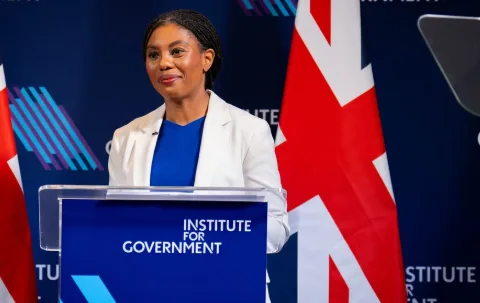
Conservative Party leader Kemi Badenoch has launched a blistering attack on Keir Starmer, branding him “a terrible Prime Minister” in the wake of his shock resignation as Labour leader.
Starmer stunned Westminster by announcing that he would step down as Labour leader while remaining in Downing Street until a successor is chosen. His decision followed months of mounting political pressure, policy U-turns and growing public discontent over his government’s direction.
Badenoch, who has positioned herself as the standard-bearer for a revived Conservative movement, used a post on X to deliver one of the most scathing critiques yet of Starmer’s short premiership. She rejected suggestions that Britain had become ungovernable, insisting instead that the problem lay squarely with Labour’s leadership and choices.
She accused Starmer’s administration of a catalogue of policy failures: raising National Insurance contributions, introducing what she labelled a “Family Farm Tax,” abandoning serious welfare reform, underfunding defence, and failing to expand domestic oil and gas production. She also condemned the appointment of Labour grandee Peter Mandelson, alleging that the government then misled the public about the circumstances.
“Hiking national insurance. The Family Farm Tax. Giving up on real welfare reform. Not funding our defence. Not drilling our own oil and gas. Appointing Peter Mandelson… then lying about what had happened. Britain is not ungovernable. Keir Starmer is a terrible Prime Minister,” Badenoch wrote.
The Conservative leader argued that the crisis went beyond Starmer as an individual, portraying it instead as a reflection of Labour’s core instincts. According to Badenoch, Labour MPs are “only” interested in higher taxes to finance expanded welfare spending, a stance she said had been underscored by the Welfare Secretary’s own comments.
“These are Labour’s choices and their values, regardless of who is running the party,” she added, warning that a change of Labour leader would not amount to a change of direction.
Badenoch used the moment to make a broader pitch for a Conservative return to power, declaring, “We need to get Britain working again. We need the Conservatives.”
In his resignation statement outside 10 Downing Street, Starmer defended his record, insisting that every decision he had taken was guided by what he believed to be in the national interest. He pledged to remain in office until Labour completes its leadership contest, setting the stage for an intense battle over the country’s political future.