The death of a young Nigerian Army recruit, Ibrahim Nazifi from Gombe State, has cast a pall of grief over his family, community and the wider public, raising fresh questions about the pressures and risks faced by new entrants into the country’s armed forces.
Nazifi, a native of Buba Bani Village in Kashere Ward of Akko Local Government Area, was undergoing basic military training at the Nigerian Army Depot in Zaria, Kaduna State, when he died after what officials described as a brief illness. He was part of the Nigerian Army Regular Recruit Intake, NA RRI 90, and was among the first batch of successful candidates from Gombe State in that intake. His application number was listed as 90RRI-GO-9017726.
The Gombe State Government confirmed his death in a formal statement issued by the Senior Special Assistant to the Governor on Security Matters and Intergovernmental Affairs, Ambassador Yusuf Danbayo. In the statement, Danbayo conveyed the government’s shock and sorrow, describing Nazifi as a patriotic young man who had stepped forward to serve his country at a time of significant security challenges.
“It is with deep sorrow, humility and total submission to the will of Almighty Allah that I announce the passing of Ibrahim Nazifi, one of our promising recruits undergoing training at the Nigerian Army Depot, Zaria,” Danbayo said, noting that the loss was being felt far beyond the immediate family.
According to the statement, Nazifi fell ill during the course of his training and died at the facility despite efforts to save his life. No further medical details were made public, and neither the Gombe State Government nor the Nigerian Army had, at the time of reporting, released an official medical report or autopsy findings. The cause of death therefore remains publicly described only as a “brief illness.”
For many in his home community, the news was both sudden and devastating. Residents of Buba Bani and the wider Kashere area saw Nazifi’s enlistment as a source of pride, a sign that one of their own had been chosen to join the ranks of the Nigerian Army at a time when the military remains central to the country’s fight against insurgency, banditry and other forms of violent crime. His death during training has instead become a moment of collective mourning.
Danbayo, speaking on behalf of the Gombe State Government, emphasized that the young recruit’s decision to join the Army reflected a deep sense of duty. He described Nazifi as a “patriotic young man who answered the call to serve his country,” adding that his passing was “a painful loss not only to his family but to the entire people of Gombe State and all well-wishers.”
The statement extended the condolences of Governor Muhammadu Inuwa Yahaya and the state government to Nazifi’s parents, relatives, friends and colleagues at the Depot. It also offered prayers for the repose of his soul, in line with Islamic tradition. “We pray that Almighty Allah forgives his shortcomings, accepts his intentions and efforts as acts of worship, and grants him Aljannatul Firdaus,” Danbayo said.
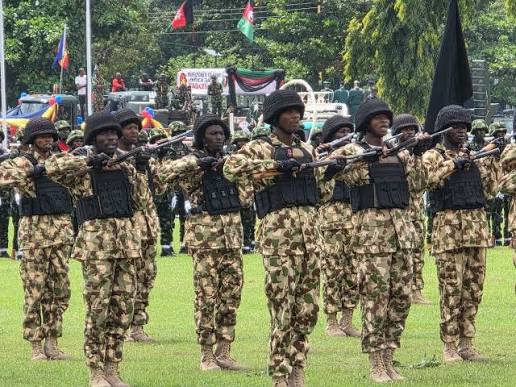
Within the Nigerian Army, basic training at the Depot in Zaria is known to be physically and mentally demanding. Recruits undergo weeks of drills, physical conditioning, weapons handling, field exercises and classroom instruction designed to transform civilians into soldiers capable of operating in some of the country’s most challenging environments. While the Army maintains that it has medical protocols and facilities in place to monitor the health of trainees, deaths during training, though relatively rare, do occur and often prompt calls for closer scrutiny of conditions in the camps.
In this case, there has been no official indication of foul play or training-related injury. The description of a “brief illness” suggests a sudden medical condition, but the lack of detailed public information has left room for speculation among some members of the public, particularly on social media, where questions are being raised about the timeliness and adequacy of medical attention available to recruits.
Military training environments worldwide are inherently high-pressure settings, and Nigeria is no exception. Recruits are often pushed to their physical limits as part of the process of preparing them for the rigours of deployment. Health screening is typically conducted before and during training, but undetected conditions or sudden illnesses can still emerge. Human rights advocates and some security analysts have periodically urged the Nigerian military to strengthen its medical screening, monitoring and emergency response systems for recruits, especially in light of the country’s broader public health challenges.
For Gombe State, Nazifi’s death is a reminder of the personal sacrifices that underpin national security. Many families in the state, as in other parts of Nigeria, encourage their children to join the armed forces in the hope of securing stable employment and contributing to the defence of the country. When such aspirations end in tragedy, the impact is felt not only emotionally but also socially and economically, particularly in rural communities where opportunities are limited.
Local leaders in Akko Local Government Area have reportedly joined the state government in consoling the family, urging them to take solace in the belief that their son died in the course of a noble path. Religious and community figures are also said to be rallying around the bereaved household, reflecting the communal nature of mourning in many parts of northern Nigeria.
The Nigerian Army has not issued a detailed public statement beyond confirming the incident through state channels, but it is customary in such cases for internal inquiries to be conducted to review the circumstances surrounding a recruit’s death. These inquiries typically examine medical records, training schedules and witness accounts from instructors and fellow trainees. Findings, however, are not always made public, which can fuel public curiosity and concern.