The New Soldier in Modern War: How Artificial Intelligence Is Changing the Battlefield
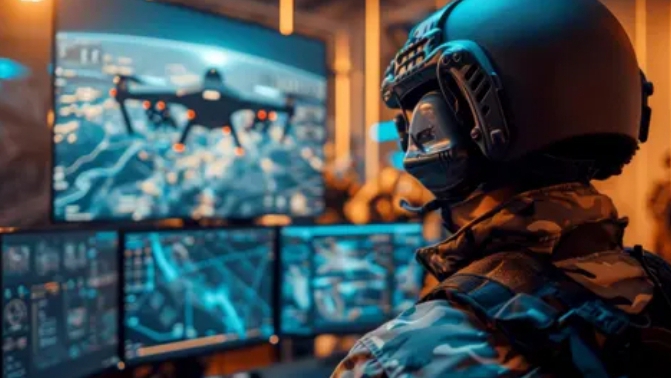
When people think about war, they often imagine soldiers, tanks and fighter jets. But in modern conflicts, another powerful tool is now involved, Artificial Intelligence (AI). Today, many military forces use AI to study large amounts of information and make sense of it quickly. Satellites, drones and surveillance systems collect huge volumes of data during conflicts, and AI helps analysts sort through it faster than humans could on their own. This means military decisions that once took days can now be made much more quickly.
One major use of AI in war is intelligence analysis. Modern armies gather information from many sources such as drone footage, satellite images and intercepted communications. AI programs can scan this information and highlight activities that may indicate military threats. For example, the United States Department of Defense developed Project Maven, an AI system designed to help analyze drone footage by identifying objects like vehicles or equipment. By assisting analysts with this task, AI allows military teams to focus more on interpreting information rather than spending hours searching for it.
Artificial intelligence is also becoming important in cyber warfare. Many countries now try to protect their computer networks from hackers while also looking for ways to disrupt their opponents’ systems. AI can help detect unusual activity in networks and respond quickly to possible cyberattacks. In the past, the United States and Israel carried out a cyber operation known as Stuxnet, which targeted parts of Iran’s nuclear program. While that operation relied mainly on advanced malware rather than modern AI, it showed how digital technology can affect national security without traditional weapons being used.
The ongoing tensions between the United States, Israel and Iran also highlight how advanced technology supports military planning today. Intelligence systems supported by data analysis help governments monitor missile tests, track military movements and watch for possible threats. These tools help decision-makers understand situations faster, especially in conflicts where information changes quickly. However, military officials still emphasize that final decisions about military action remain in human hands.
Even as technology becomes more advanced, the impact of war is still deeply human. Behind every piece of data analyzed by a machine are real people, families living in conflict zones, soldiers carrying out orders and communities facing uncertainty. Artificial intelligence may change how wars are planned and fought, but it does not change the reality that the consequences of war are felt most by ordinary people.