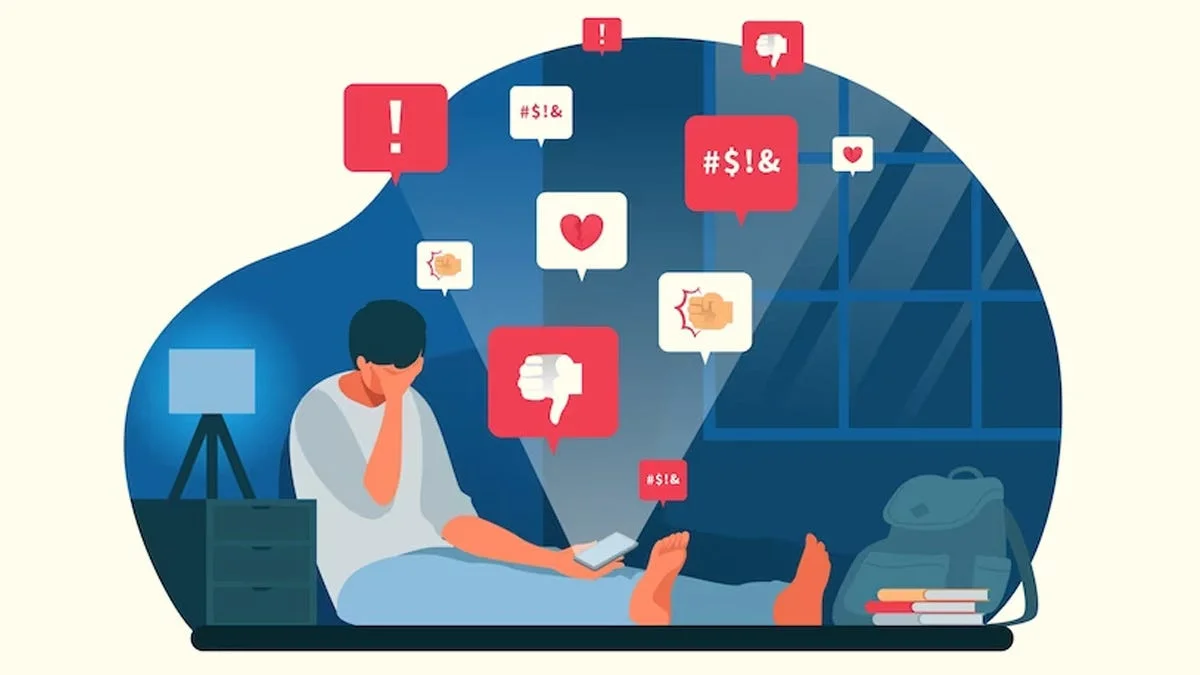
Many of us spend hours scrolling through social media everyday. But have you ever stopped to think about the impact it has on our mental health?
“I will sleep by 7pm,” Tolu said, but spends nearly 4 hours scrolling through TikTok or Instagram reels. This became a daily routine she could not escape.
As she continued scrolling through people’s content celebrating their goals and lifestyle, Tolu, a 19-year-old, began to compare herself to grown ups who are showcasing their polished and filtered lifestyle. These habits begin to create unrealistic expectations and wear down self-esteem over time.
Studies by Cleveland clinic show that those who spend a significant amount of time online, about two hours each and every day, are at risk for anxiety and depression. Dr. Albers said, “When you spend a great deal of time online, the connection turns into comparison or competition. This is a significant trigger for mental health issues.”
An online survey was conducted that included 575 young adults on the time spent on social media as well as depression, anxiety, PTSD, loneliness and self-esteem. Social media usage has increased rapidly in recent years. Rates of social media use are even more dramatic in younger cohorts, as 90% of teens and young adults report regular use.
Because of the alarming increase in reported mental health difficulties among adolescents and young adults, there has been considerable interest in understanding the effects that social media has on young people’s psychological well-being.
The big benefit is that it significantly reduces isolation by a ‘virtual’ bridge to family, friends and other social supports. Some people become tech savvy over time, which is great, learning new things gives the brain exercise.
Using social media for its intended purpose — to follow other individuals in your life, to stay up to date — instead of using social media in lieu of in-person connection, validation or seeking approval, said Dr. Albers.
Those who are geographically isolated, have a disability or social anxiety, social platforms can be a lifeline to stay connected.
Eventually, Tolu decided to reduce the time she spends online and focus more on real conversations with friends and family. She discovered that while social media can connect people, balance is necessary to protect mental well-being.
In summary, social media can be useful for communication and connection, but too much use can affect mental health. It is important for people to use it wisely and maintain a healthy balance between their online and real lives.
References:
- Mayo Clinic. (2023). The pros and cons of social media on mental health.
- Cleveland Clinic. (2025). How social media impacts mental health.
- Springer. (2024). Social media use and mental health among young adults.