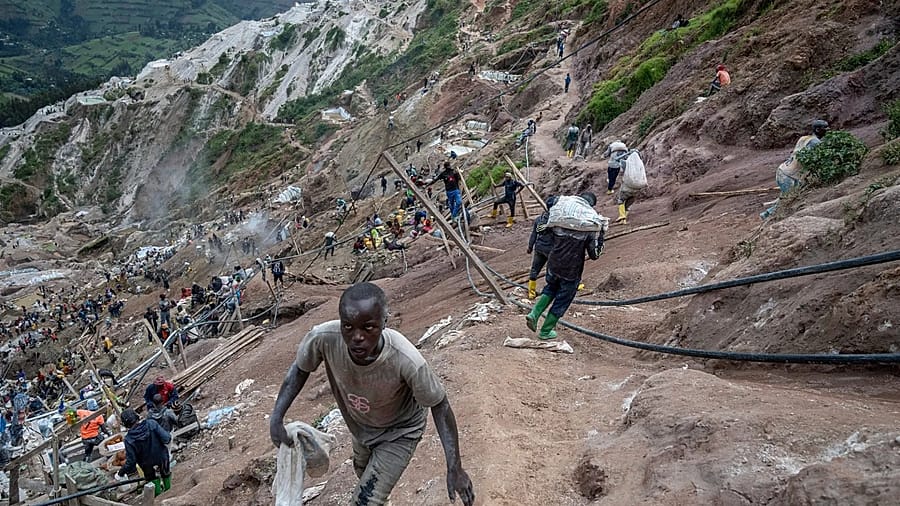
The Democratic Republic of Congo has unveiled a new paramilitary mining security force, a $100 million initiative backed by the United States and the United Arab Emirates, in a move that could reshape control over some of the world’s most strategic mineral reserves.
The General Inspectorate of Mines described the force as a “paramilitary special unit intended to secure the entire mineral exploitation chain” across the country. The unit will begin with an initial deployment of 2,500 to 3,000 personnel, trained in coordination with the regular armed forces, before expanding to more than 20,000 members by the end of 2028 in all 22 mining provinces.
Officials say the new guard will assume responsibilities currently handled by the army, including securing industrial and artisanal mine sites, escorting high-value mineral convoys to processing plants and border posts, and protecting foreign investments. The aim is to curb rampant smuggling, reduce armed group interference and reassure investors wary of chronic instability.
Congo produces about 70 percent of the world’s cobalt, a metal essential for electric vehicle batteries and advanced defence systems, and also holds major deposits of copper, coltan and lithium. Chinese companies dominate much of the sector, but US and other Western firms have been pushing to expand their presence as Washington seeks to loosen Beijing’s grip on critical mineral supply chains.
Under a minerals partnership signed between Kinshasa and Washington, US-backed Virtus Minerals has taken over copper-cobalt producer Chemaf, and other Western companies are eyeing assets in both government- and rebel-held areas. The new security unit is seen as a key instrument for making such investments viable.
Inspector general of mines Raphaël Kabengele said the initiative is part of the president’s drive to “clean up the entire mining sector” by enforcing good governance, transparency and traceability from pit to export. Authorities hope tighter control will increase state revenues and limit the role of armed groups that have long profited from illicit trade, especially in the conflict-ridden east.
The DRC and Rwanda have also signed an agreement that combines security and economic measures, including provisions aimed at guaranteeing supplies of strategic minerals to American high-tech industries. Yet negotiations with M23 rebels remain fragile, and fighting continues on several fronts, underscoring the risks facing the new paramilitary guard as it moves to secure one of the world’s most contested resource frontiers.