Drought and desertification have become major environmental challenges affecting Nigeria, Africa, and the world today.
Desertification has become a significant issue, leading to the expansion of deserts, the destruction of vegetation, the loss of wildlife habitats, and the extinction of many plant and animal species. This poses a serious threat to the ecosystem and the lives that depend on it. If left unaddressed, desertification will continue to destroy biodiversity and reduce the productivity of the environment.
One of the major causes of desertification is deforestation. The indiscriminate cutting down of trees removes the natural shield that protects the soil. Without trees, the soil loses moisture, nutrients, and the support provided by tree roots. As a result, it becomes exposed to harsh sunlight, strong winds, and heavy rainfall, which gradually wash away the fertile topsoil and transform once-productive land into desert.
Research shows that desertification affects between 43% and 63% of Nigeria's total landmass, with the continuous cutting down of trees being one of its major causes. Nigeria loses approximately 350,000 hectares of land to desertification every year.
The northern part of the country is the most affected. States such as Borno, Yobe, Jigawa, Katsina, Sokoto, Zamfara, and Kebbi are at the frontline of this environmental crisis. In these states, between 50% and 75% of the land is threatened by desertification, negatively affecting agriculture, livelihoods, climate, and weather patterns.
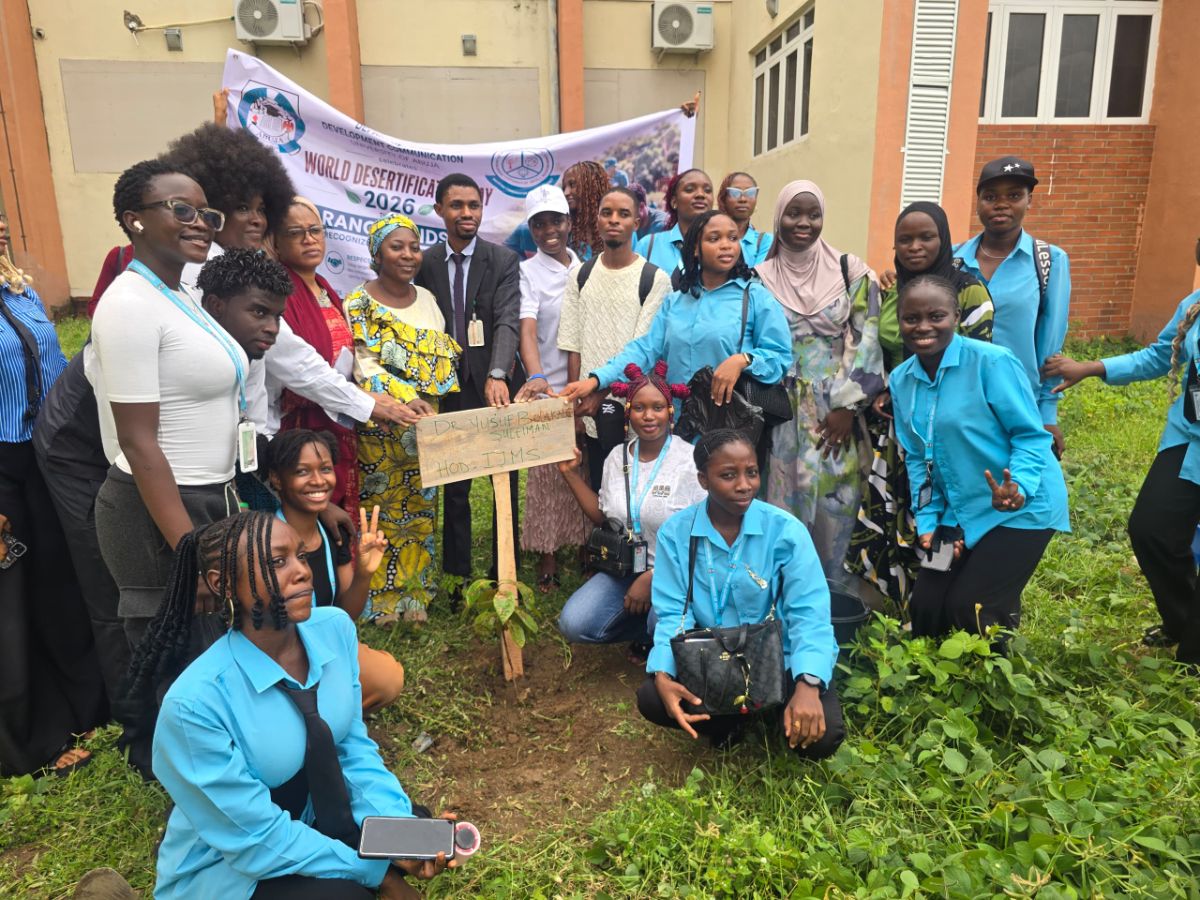
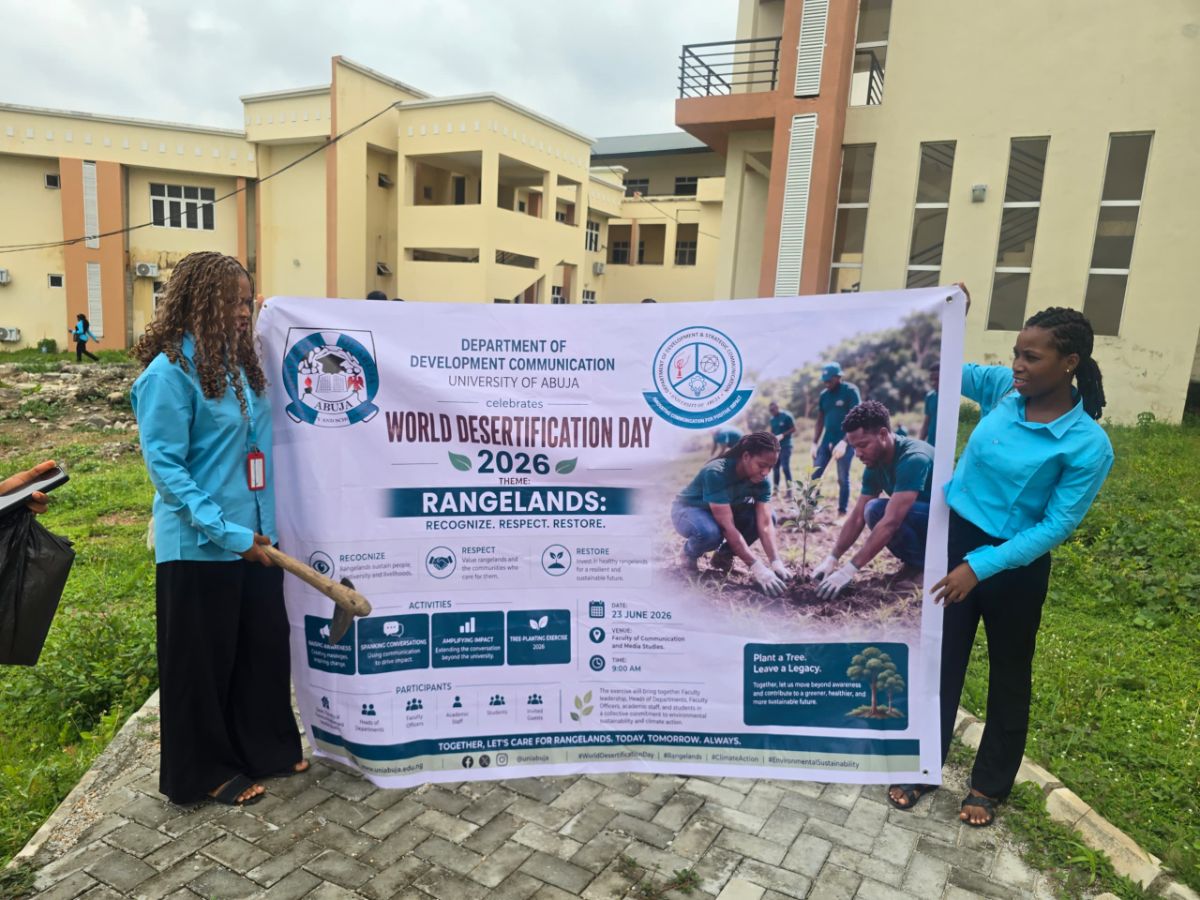
In response to this growing environmental challenge, students of the Faculty of Communication and Media Studies, Department of Development and Strategic Communication, University of Abuja, carried out a tree-planting initiative aimed at promoting environmental sustainability and combating desertification.
The initiative was organized by Dr. Jamila Dahiru, not only to educate, enlighten, and inform people about the importance of tree planting, but also to inspire action, promote behavioural change, and encourage social mobilization within communities. She emphasized that the essence of communication is not merely to inform people, but to transform their perceptions, attitudes, and behaviours toward important societal issues.
The exercise involved planting trees, watering the seedlings, and creating a conducive environment for their healthy growth. These activities served as a powerful reminder that meaningful change begins with individual actions, no matter how small. Every tree planted represented hope for a greener future and a commitment to protecting the environment.
The initiative was also supported by Dr. Sarah Gambo, Head of the Department of Broadcasting and Film Studies; Dr. Yusuf Bolakale Suleiman, Head of the Department of Information, Journalism and Media Studies; Mrs. Funmilayo Braithwaite, a celebrated author; and Dr. Aisha Abdulrauf, Head of the Department of Development and Strategic Communication.
The tree-planting initiative served as a reminder that every individual has the ability to inspire positive change. Regardless of how small our contributions may seem, our collective efforts can create a lasting impact in protecting the environment and building a more sustainable future for generations to come.