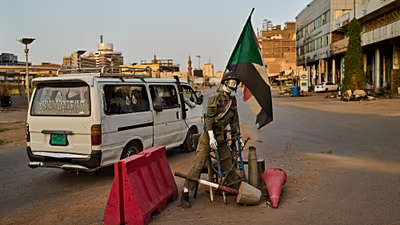
Khartoum’s skyline is a jagged silhouette of shattered concrete and twisted metal, yet signs of a fragile revival are beginning to emerge from the ruins. One year after Sudan’s army wrested back control of the capital from the Rapid Support Forces, the city is edging from battlefield to battered metropolis, even as war still rages elsewhere.
In the city center, the once-glittering Corinthia hotel stands hollowed out, its glass facade blown away, a stark monument to the ferocity of the urban combat that engulfed Khartoum. Nearby ministries, banks and apartment blocks are scorched or gutted, their walls pocked with shell impacts. Many streets remain lined with burned-out vehicles and improvised barricades.
The Arab souk, once a dense maze of stalls selling gold, spices and electronics, is only slowly stirring. A handful of traders have returned, raising metal shutters over half-ruined shops and sweeping away dust and debris. Customers drift through in small numbers, often carrying more memories than money, in an economy shattered by conflict, inflation and isolation.
According to international agencies, the army’s consolidation of control over Khartoum and other central cities has allowed millions of displaced residents to come back. Entire families arrive on overloaded trucks, returning to homes that are looted, damaged or uninhabitable. Many now live in a single surviving room, sharing space with relatives or neighbors, improvising repairs with salvaged bricks and sheet metal.
Basic services are only partially restored. Electricity flickers on for a few hours a day in many districts, powered by a patchwork of repaired lines and private generators. Water flows intermittently through cracked pipes, forcing residents to queue at public taps or buy from tanker trucks when the network fails. Hospitals and clinics, stripped of equipment and staff during the fighting, struggle to cope with trauma injuries, disease and malnutrition.
The human toll of Sudan’s wider war is staggering. Conflict monitors estimate tens of thousands killed and millions uprooted nationwide, with aid agencies warning that more than half the population now needs assistance. For Khartoum’s returning residents, survival depends on a mix of community solidarity, remittances from abroad and sporadic humanitarian deliveries that often arrive too late or in too small quantities.
In the evenings, as the heat eases, children play football in streets once raked by gunfire and small tea stalls reopen on cracked sidewalks. It is a modest, defiant normality in a city still haunted by war, where the future remains as uncertain as the next power cut.



