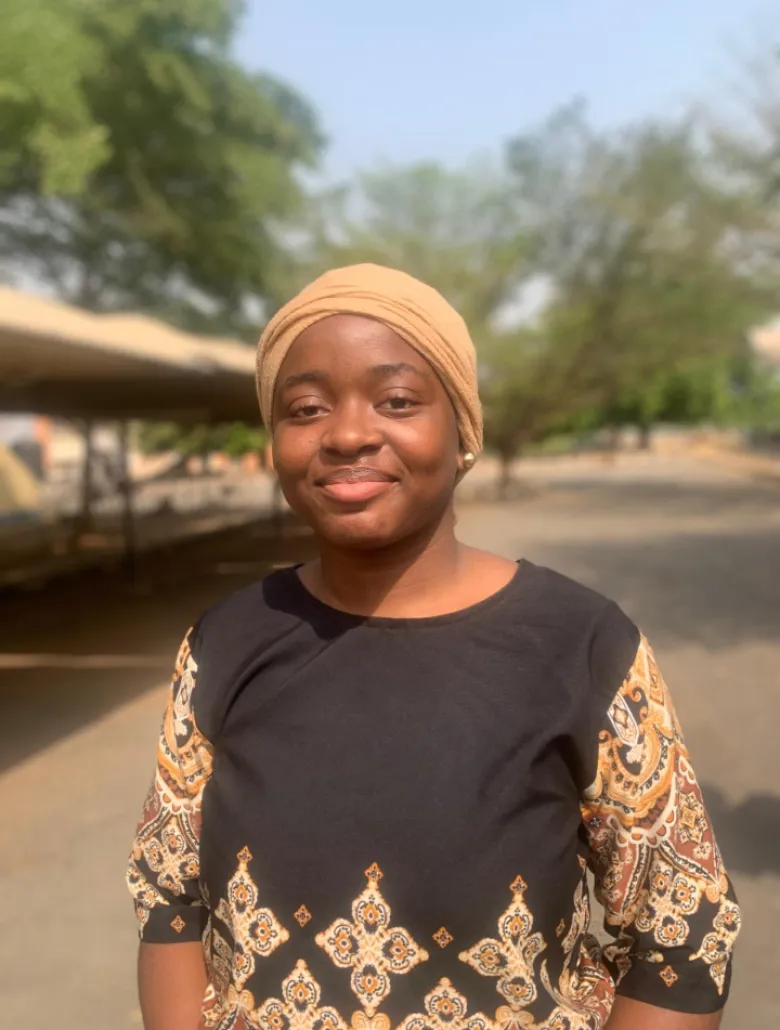
In the parched expanse of Sudan’s Northern State, where hot winds whip through makeshift camps and dust settles on everything, doctors like Ikhlas Ahmed Abdalla Adam are fighting a quiet, relentless battle to keep people alive.
They work in clinics that were never meant to handle mass displacement, in hospitals stripped of supplies, and in camps that have grown into sprawling, improvised towns. According to the United Nations Population Fund, UNFPA, some Sudanese health workers are going so far as to donate their own blood to patients when supplies run out.
UNFPA is supporting emergency obstetric and reproductive health services at facilities such as the clinic in Al-Affad Camp and Al-Dabbah Maternity Hospital in Northern State. These centres have become lifelines for women and families uprooted by the war between the Sudanese Armed Forces and the paramilitary Rapid Support Forces, a conflict that has torn through cities, villages, and the country’s already fragile health system.
The agency’s assistance includes training community midwives, deploying roving midwife teams to reach women in remote or insecure areas, and providing care for displaced women who arrive with nothing but the clothes they are wearing. In many places, these midwives are the only health professionals that pregnant women will ever see.
For Ikhlas, the crisis is not an abstraction. Before she arrived in Northern State, she worked at the Saudi Hospital in al-Fashir, in North Darfur, one of the largest medical facilities in the region. The hospital became a frontline casualty when the Rapid Support Forces moved to seize control of the city.
“The situation was extremely difficult. I wished I could stay at the hospital, because the journey from the hospital to my house was itself a serious risk, you could be hit by a shell,” she recalls. Many of her colleagues never made it home. “A whole team was killed in the ER of the Saudi Hospital,” she says.
Inside the hospital, the shortages were as deadly as the shells outside. With supply lines cut and warehouses looted or destroyed, basic medical items vanished. “The equipment was insufficient. We cut up bedsheets for bandages. We worked with mosquito nets, cutting them up as well,” Ikhlas says. “Truly, we did everything we could. We were performing procedures outside the operating room, surgeries done right out in the open.”
Those scenes have been repeated across Sudan as the conflict has spread. Health facilities have been attacked, occupied, or forced to close. Doctors’ unions and humanitarian agencies report that many hospitals in the worst-affected areas are no longer functioning, while others operate only partially, often without electricity, clean water, or security.
In this landscape, the work of UN agencies and local health workers has become a race against time. UNFPA and its partners are trying to keep essential services running: safe deliveries, emergency obstetric care, treatment for survivors of gender-based violence, and basic reproductive health services that can mean the difference between life and death for women and newborns.
But the needs are overwhelming. The UN estimates that nearly 34 million people in Sudan will require humanitarian assistance, with more than 20 million needing health support and 21 million facing acute food insecurity. Aid agencies describe Sudan as the largest humanitarian crisis on record, a catastrophe that has unfolded largely out of the global spotlight.
Behind those numbers are families like that of Farha Ahmed, a mother who fled with her children as fighting closed in on her community. She is one of an estimated 14 million people displaced by the war, forced to leave homes, livelihoods, and support networks behind.
“After reaching Mellit, I sat in the intense heat. I had nothing to eat or anything else. We didn’t even have a change of clothes, and I had nothing for the children to eat,” Farha says. Exhausted and desperate, she found herself in a camp with no clear idea of what would come next.
That was where she met Ikhlas. “Thank God, I found Dr Ikhlas. She came to me and asked, ‘What is wrong, my sister? Don’t you have a place to stay?’ I told her everything – that I truly had nothing.”
For displaced women like Farha, the presence of a doctor or midwife can be a rare anchor of stability. Many have endured long journeys on foot or in overcrowded vehicles, often while pregnant or caring for small children. They arrive in camps malnourished, dehydrated, and traumatised, with limited access to clean water, sanitation, or food.
In these conditions, pregnancy and childbirth become even more dangerous. Sudan already had one of the highest maternal mortality rates in the world before the conflict escalated. Now, with health facilities destroyed or inaccessible and medical staff scattered or displaced, the risks have multiplied.
UNFPA-supported teams in places like Al-Affad and Al-Dabbah are trying to fill the gaps. Community midwives are trained not only to assist with deliveries but also to identify complications early and refer women to higher-level care when possible. Roving teams travel to settlements and remote areas, carrying basic supplies and offering antenatal check-ups, family planning counselling, and emergency referrals.