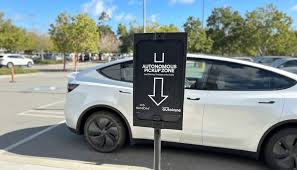
The rapid push for robotaxi services by companies like Waymo and Zoox has generated more than just curiosity—it has exposed a growing disconnect between technological ambition and practical reality. While the idea of stepping into a driverless taxi or outsourcing errands like grocery pickups to autonomous vehicles may sound enticing, it also reveals how eagerly these companies gloss over the real-world hurdles still unresolved. The glossy vision of convenience obscures the inconvenient truth: the technology remains fragile, untested at scale, and far from seamlessly integrated into everyday life.
Autolane’s emergence as a supposed solution—backed by $7.4 million in funding—only sharpens this tension. The company promises infrastructure to coordinate these vehicles, particularly at handoff points like shopping centers, but such efforts feel more like attempts to retrofit stability onto inherently unstable systems. The much-touted partnerships with groups like Simon Property merely shift the burden of complexity onto private businesses, sidestepping the broader civic questions that autonomous mobility inevitably raises. Rather than demonstrating progress, these moves underscore how incomplete and ad hoc the current ecosystem truly is.
Even Autolane’s own narrative betrays the fragility of the vision. CEO Ben Seidl speaks of “bringing order to chaos,” a phrase that inadvertently acknowledges just how chaotic the current state of autonomous operations remains. The company’s insistence on developing sophisticated communication frameworks reflects not inevitability but insecurity—an admission that the vehicles themselves are not capable of reliably handling the environments they are designed to navigate. Critics rightly question whether such layers of coordination are a sign of technological immaturity rather than a marker of innovation. Meanwhile, the refusal to collaborate with municipalities raises serious concerns about oversight, coherence, and public safety.
Ultimately, while companies like Autolane champion a future of frictionless mobility, many observers remain unconvinced—and for good reason. Incidents like a Waymo robotaxi getting stuck in a Chick-fil-A drive-through are not harmless anecdotes; they are symptoms of a technology not yet ready for deployment, let alone mass adoption. The insistence on pushing forward, despite visible shortcomings, feels premature and potentially reckless. Until the industry can prove that its systems work reliably outside controlled conditions, skepticism isn’t just justified—it’s necessary.