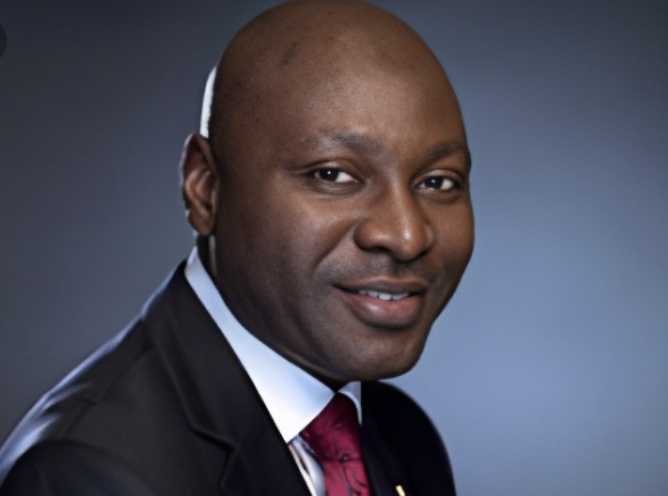
Matric Number; 230902125
Across years of reporting, Gbenga Salau’s work in The Guardian pieces together a hidden story of public health, environmental neglect, and policy gaps that affect everyday Nigerian life more than we realise.
Salau is a Lagos-based, multiple award-winning journalist whose work spans public health, environmental issues, governance, education, research, and development policy. Rather than treating these areas as separate beats, his reporting repeatedly connects them, showing how decisions made in government offices eventually manifest in homes, communities, and hospitals.
A recurring concern in his work is household air pollution, particularly the continued reliance on firewood, kerosene, and charcoal for cooking. His reporting highlights expert findings showing that tens of millions of Nigerian households still depend on these fuels, exposing families to toxic smoke on a daily basis. The health consequences are severe, ranging from respiratory diseases to long-term cardiovascular complications. What stands out in Salau’s coverage is the framing of this issue not as a cultural preference, but as a structural failure which is riven by poverty, limited access to clean energy, and slow policy response.
From the air inside homes, his reporting often shifts outward to the environment at large, especially waste management. Nigeria’s informal recycling economy features prominently in his work, where he documents how scavengers burn plastics and electronic waste to extract valuable materials. While this provides income for many, it also releases harmful toxins into the air, degrading environmental quality and endangering public health. Salau’s reporting captures this tension clearly: survival strategies created by economic hardship can themselves become sources of long-term harm when regulation and support systems are absent.
These environmental issues, in Salau’s reporting, are not abstract. They show up directly in hospitals. He has highlighted official statements linking environmental pollution to a significant percentage of illnesses treated in Lagos health facilities, reinforcing the idea that pollution is not merely an environmental concern but a major public health burden. Disease, in this context, is shown as a consequence of daily exposure rather than isolated outbreaks.
His public health reporting extends beyond environmental causes to disease monitoring and prevention. Salau has written extensively on HIV in Lagos, revealing the scale of infection and the importance of sustained community outreach for testing and treatment. His work shows how disruptions in outreach efforts can quickly undermine years of progress, leaving vulnerable populations at risk. In a similar vein, his coverage of vaccination campaigns including the integration of the measles-rubella vaccine into routine immunisation emphasises prevention as one of the most cost-effective and impactful health strategies available.
Healthcare delivery itself is another consistent thread. Through his reporting on health partnerships and advocacy groups, Salau documents calls for stronger private-sector involvement in healthcare financing and service delivery. His work suggests that without coordinated collaboration between government, private organisations, and communities, efforts toward universal health coverage will remain fragile.
This emphasis on systems also appears in his coverage of planning and budgeting. Salau reports on government commitments to evidence-based planning while subtly exposing the gap between stated intentions and lived realities. Development, as his work repeatedly shows, is less hindered by a lack of knowledge than by inconsistent execution and accountability.