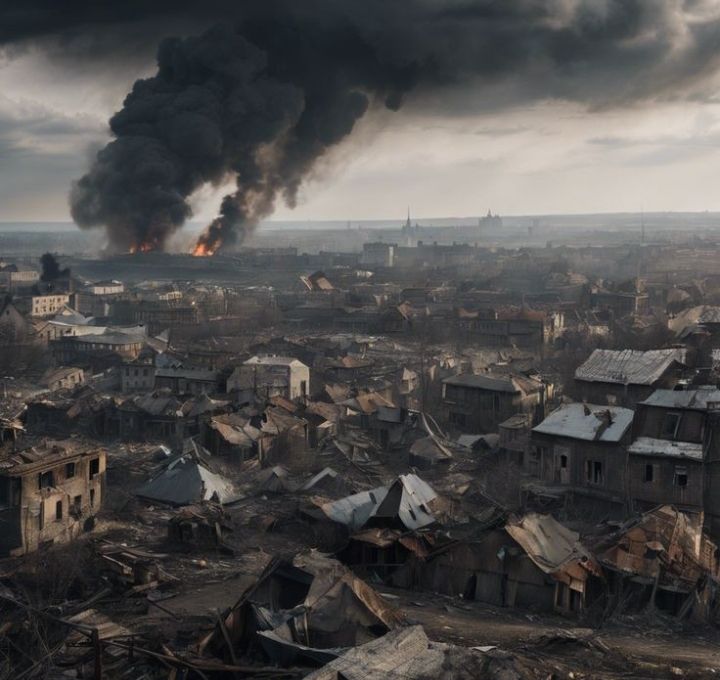
I wonder how people gather courage to keep on studying even in the midst of sudden airstrikes, gunfire and silence of indefinite school closure, signs that the world is on the verge of collapse. I think about this often, not just as a student but as someone who has watched education be disrupted again and again even without the sound of bombs.
In Gaza, university buildings have been reduced to rubble while in Sudan, students have fled with transcripts they may never use. In Ukraine, some still attend virtual classes from bunkers. Still , it is the same story of instability told in different accents about young people caught between ambition and survival.
And while my own reality has not made international headlines, it has left scars too. Eight months of strikes, constant fear of campus attacks and the quiet disillusionment that creeps in with every disrupted semester. I have never studied under gunfire but I have studied under pressure that felt just as loud as a bomb.
In Gaza, more than 80 percent of schools have been damaged or destroyed since the 2023 escalation and many universities have ceased operations entirely. According to UNICE, tens of thousands of Palestinian students have been displaced. Their education has been buried under layers of trauma, loss and uncertainty. I once read that some of them still try to study in shelters with the last remaining books they could grab. I do not know how they do it but somehow they do.
In Sudan, war has closed most public universities. The UN estimates that over 8 million children and students have been affected with many now living as refugees in neighbouring countries. Others have simply stopped learning altogether. I try to imagine what it would feel like to have my final year stolen like that. To prepare for a thesis and instead be forced to prepare for survival. It is a grief I cannot fully understand but one I cannot ignore.
Even in Ukraine, where education systems have tried to stay afloat through online learning, the weight of war is impossible to hide. Power cuts, air raids, displacement all occur yet a striving student will probably be expected to submit assignments. These are not just news reports or faraway happenings. To me, they are stories of people like me with exam fears, academic goals and dreams of something better, something extraordinary.
And then there is me sitting in a classroom in Nigeria staring at a whiteboard and wondering when the next strike will start. Wondering if the semester I'm planning for will even end. In 2022, Nigerian universities were shut for eight full months due to ASUU strikes. Eight months. That is enough time to complete an entire academic year. Or forget everything you have learnt so far. Or start a business out of frustration. Or lose your will to continue altogether.
I have had to fight for my education in quieter, less visible ways. Not with bombs overhead but with broken stems underfoot. We have had to sit through lectures in overcrowded halls with no microphones. We have studied for exams with unpaid lecturers. We have adapted to new calendars like soldiers adapting to terrains never certain what comes next only that we must keep moving.
And still, like students in Gaza or Khartoum or Kyiv, we continue. We write tests. We join group chats. We cram notes into tired brains And maybe that is the most remarkable thing, that in a world constantly threatening to unravel, students still choose to learn. Not because the conditions are ideal but because hope is hard to unlearn.
There is something deeply unfair about how education is distributed across the world. For some, a paused semester means resuming elsewhere, in a new country, new life, a second chance. For people like me, a paused semester is a dead end. No passport. No funding. No guarantee that the system will even remember us.