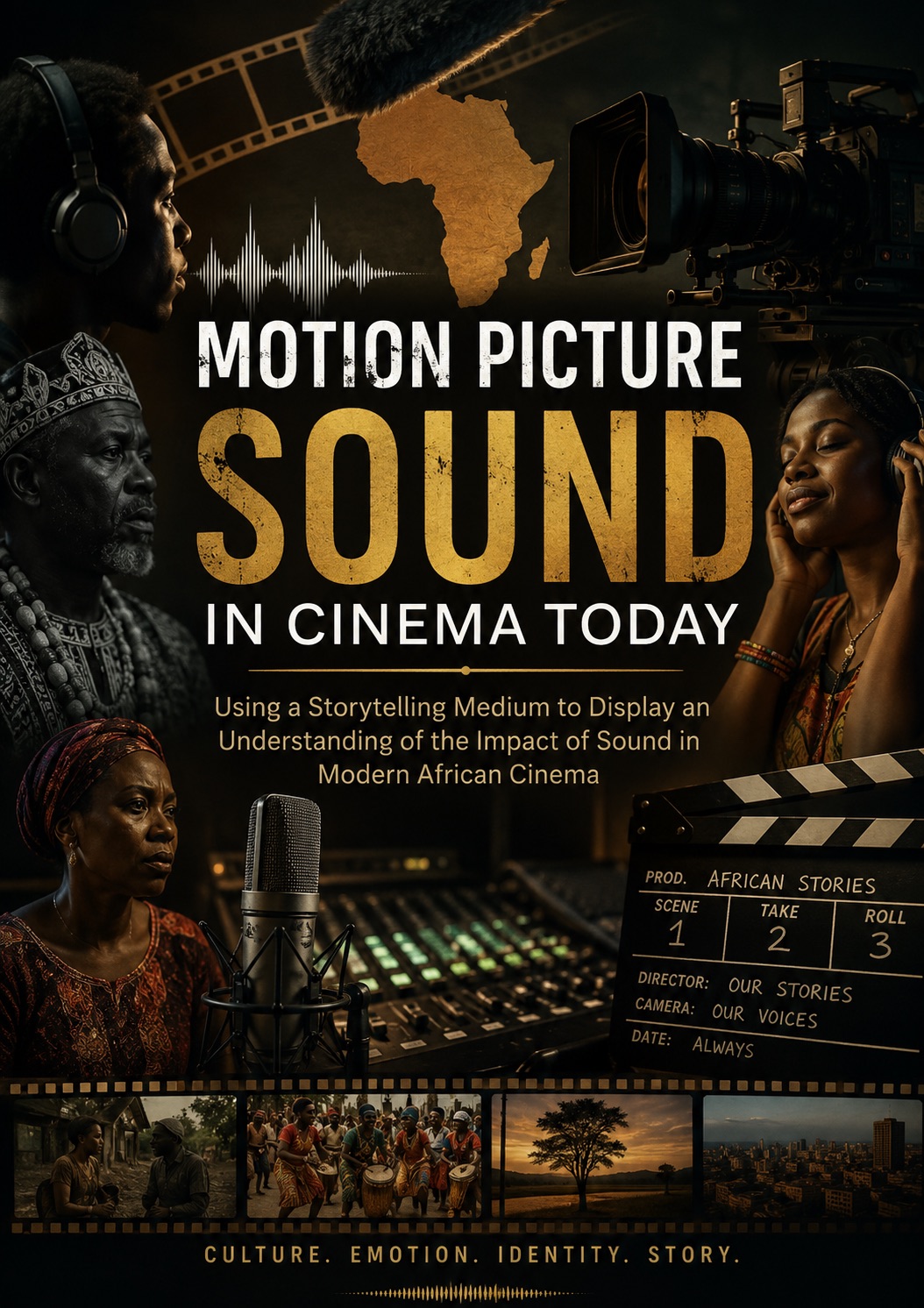
Motion Picture Sound in Cinema Today: Using Sound as a Storytelling Medium to Display an Understanding of the Impact of Sound in Modern African Cinema
Motion picture sound refers to every sound used in a film, including dialogue, music, sound effects, ambient sound, silence, and narration. In today’s cinema, sound is more than just something we hear in the background. It is a powerful storytelling medium that helps filmmakers communicate emotions, develop characters, build suspense, and create realistic environments. In modern African cinema, sound has become an important tool for telling authentic stories, preserving culture, and connecting audiences with the experiences of African people.
One of the greatest strengths of sound is that it can tell a story even before the audience sees what is happening on the screen.
Imagine a young woman named Ada who lives in a small Nigerian village. The film opens before sunrise. The audience hears roosters crowing, birds singing, women sweeping their compounds, and the distant call to prayer. Before the camera even shows the village, these sounds already tell viewers where the story is taking place. They create a peaceful atmosphere and introduce the audience to everyday African life.
As Ada walks to the market, different sounds fill the air. Traders advertise their goods, children laugh while playing, motorcycles pass by, and traditional drums can be heard from a nearby cultural festival. These natural sounds make the environment feel real and help the audience understand the community without anyone explaining it.
One evening, Ada is returning home when she suddenly hears footsteps behind her. The background music changes from cheerful to slow and tense. The crickets become silent, and only the sound of her breathing and the approaching footsteps can be heard. Although the audience has not yet seen who is following her, the sound alone creates fear and suspense. This shows how sound can control the emotions of viewers and keep them interested in the story.
Later, Ada receives admission to study filmmaking in the city. Her family celebrates while joyful traditional music plays in the background. The talking drums, singing, and cheers express happiness better than words alone. When she arrives in the city, the peaceful sounds of the village disappear and are replaced by traffic, car horns, generators, busy markets, and loud streets. The audience immediately understands that Ada has entered a completely different environment.
Several years later, Ada returns to her village as a successful filmmaker. The same traditional music heard at the beginning of the film is played again, but this time it sounds richer and more emotional. It reminds the audience of her journey and shows that she has achieved her dream without forgetting her roots. Through this storytelling, sound becomes an important part of the narrative, helping the audience follow Ada’s emotional and personal growth.
Modern African cinema uses different types of sound to make stories more effective. Dialogue helps characters communicate and move the plot forward. Background music creates emotions such as happiness, sadness, fear, love, or excitement. Sound effects such as rain, thunder, footsteps, doors opening, or gunshots make scenes more believable. Ambient sounds like village life, market noise, churches, mosques, rivers, forests, and city traffic help establish the setting. Silence is also important because it allows emotional scenes to have greater impact and creates suspense during dramatic moments.
The impact of sound in modern African cinema is very significant. Firstly, it helps preserve African culture through indigenous languages, traditional songs, local instruments, folktales, and cultural ceremonies. Secondly, it creates realism by using sounds that audiences recognise from their everyday lives. Thirdly, it strengthens emotional connection between viewers and characters, making stories more memorable. Sound also improves the quality of films, making African productions more competitive on the international stage. With modern sound technology, African filmmakers are now producing films that meet global standards while still maintaining their cultural identity.
Many successful African films demonstrate the importance of sound. Aníkúlápó uses traditional Yoruba music, chants, and environmental sounds to create an authentic historical atmosphere. King of Boys combines powerful background music with silence to build tension and emphasise emotional conflict. The Milkmaid uses natural sounds and quiet moments to portray fear, loneliness, and the effects of conflict, while The Wedding Party uses lively Nigerian music and celebration sounds to create excitement and reflect the country’s vibrant culture.
Despite these achievements, sound production in African cinema still faces some challenges. Some filmmakers have limited budgets for quality recording equipment, while environmental noise and unstable electricity can affect sound recording. There is also a need for more trained sound professionals in some parts of the continent. However, improvements in digital technology, better training, and increased investment continue to improve the quality of sound in African films.
In conclusion, motion picture sound is one of the most important storytelling tools in cinema today. It is not only used to support visuals but also to create emotions, build suspense, establish settings, develop characters, and preserve African culture. Modern African cinema has shown that sound can communicate powerful stories that reflect the lives, traditions, and experiences of African people. As the industry continues to grow, effective sound design will remain a major factor in producing films that are engaging, realistic, and recognised around the world.