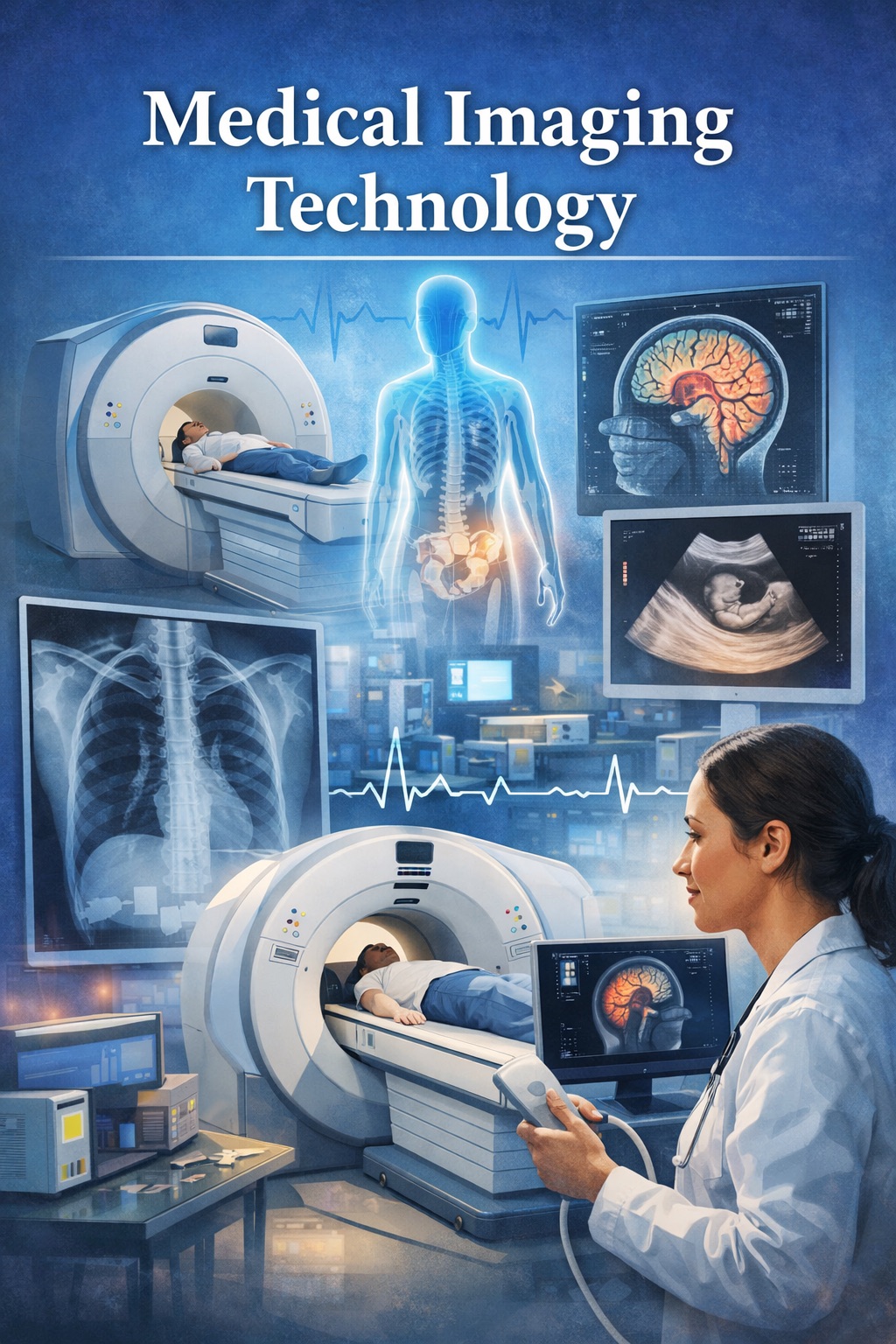
As science and technology continue to progress, the future of medical imaging technology looks very promising. Researchers and engineers are constantly working on improving existing machines so that they become faster, safer, and more accurate. New imaging systems are being designed to reduce radiation exposure while still producing high-quality images. This shows that the field is not static but continuously evolving to meet the needs of both patients and medical professionals. One of the expected developments in medical imaging is the use of more advanced digital systems. With improved computer software, images can now be enhanced, analyzed, and interpreted more efficiently. This makes diagnosis quicker and reduces the chances of human error. In the future, imaging machines may become even more automated, assisting doctors by highlighting areas of concern within the body. Such improvements could make medical diagnosis more reliable and consistent. Another possible advancement is the expansion of imaging services to underserved communities. As technology becomes more affordable, more hospitals and clinics may be able to acquire modern imaging equipment. This will help bridge the gap between urban and rural healthcare services. Greater accessibility means that more people can benefit from early detection of diseases, which can significantly improve survival rates and overall public health. In addition, ongoing research is exploring ways to combine different imaging techniques to produce more detailed results. By integrating multiple methods, doctors may gain a clearer understanding of complex medical conditions. This combined approach could lead to more personalized treatment plans for patients, ensuring that care is tailored to individual needs.
Related Stories


 Liked by
Alex Odunjo and 4 others
The brain depends on a steady supply of choline. If anxiety keeps the brain in a prolonged state of alert, the researchers suggest it may raise the ...Read more
5
1
1.1K
 Liked by
Chioma Chi and 7 others
Happy weekend family..so my parents prayed & handed over the situation to God. Then they took us all to the hospital & blood was drawn from us. Almo...Read more
8
2
692


Both mother & father were highly educated. In fact they were lectures at Amadu Bello University Zaira at the time but they had no clue whatsoever ab...Read more
6
1
658
 Liked by
Peace Toluwani and 13 others
HeathTech Vs Patient’s Bill of Right. By: Babalola Abigael Navigating healthcare can be complex, and knowing where you stand is the first step towar...Read more
14
1.4K
Attach Product

