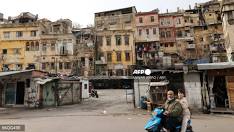
Fourteen people have been confirmed dead after a residential building collapsed in the northern Lebanese city of Tripoli, exposing once again the lethal consequences of years of neglect and unregulated construction in one of the country’s poorest urban centres.
The structure, located in the Bab al-Tabbaneh neighbourhood, consisted of two adjoining blocks, each with six apartments. Authorities said 22 people were inside when the building suddenly gave way. Civil defence chief Imad Khreish said eight residents were pulled out alive, but 14 others were found dead as rescuers worked through the mangled concrete and twisted metal.
Standing before the ruins, Khreish announced the end of search and rescue operations, confirming there were no more people unaccounted for. Security forces had earlier evacuated neighbouring buildings amid fears that further collapses could follow.
The tragedy has intensified anger in Tripoli, where residents have long complained that crumbling infrastructure and unsafe housing are being ignored by authorities. Mayor Abdel Hamid Karimeh declared Tripoli a disaster-stricken city, warning that thousands of residents are living in buildings at risk of collapse.
Prime Minister Nawaf Salam, speaking after an emergency cabinet meeting, said the government had ordered the phased evacuation of 114 buildings in Tripoli deemed structurally dangerous. Families forced to leave their homes are to receive a housing allowance for one year, while the High Relief Committee will begin reinforcing buildings that can be salvaged and demolishing those beyond repair.
Lebanon is dotted with derelict and illegally built structures, many dating back to the 1975-1990 civil war, when construction boomed without oversight. In numerous cases, additional floors were added to existing buildings without permits or engineering studies, overloading already fragile foundations.
Tripoli has suffered a series of similar incidents, including another fatal collapse in the city just weeks earlier. Rights groups have repeatedly warned that thousands of residents remain in unsafe housing, particularly after the powerful earthquake centred in Turkey and Syria further weakened already compromised buildings.
Local activists and engineers say the latest disaster underscores the urgent need for a nationwide survey of at-risk structures, strict enforcement of building codes, and a long-term housing policy that does not leave the poorest residents to gamble daily with their lives.