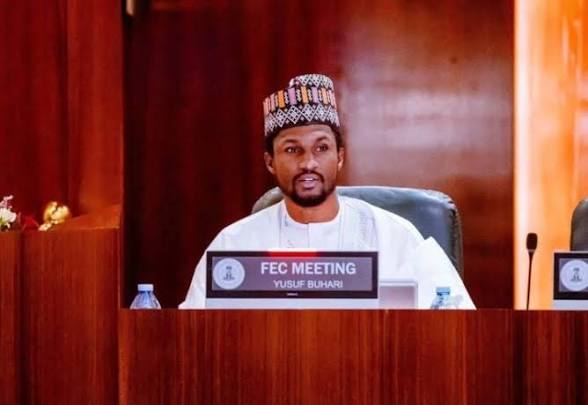
Yusuf Buhari, the only son of the late former President Muhammadu Buhari, has declared his intention to contest for a seat in Nigeria’s House of Representatives in the 2027 general elections.
He is seeking the ticket of the All Progressives Congress APC to represent the Sandamu Daura Mai’Adua federal constituency in Katsina State, a constituency historically linked to his late father’s political base.
The announcement of his ambition was made public by former presidential aide Bashir Ahmad on the social media platform X. Ahmad stated that Yusuf had concluded consultations with political stakeholders in the constituency and within the APC, and had formally informed key party figures and community leaders of his decision to run.
This declaration represents a shift for Yusuf Buhari from a largely private role into active frontline politics. During Muhammadu Buhari’s presidency from 2015 to 2023, Yusuf maintained a low public profile, appearing in the news only intermittently, including after a widely reported power bike accident in Abuja.
His entry into the race is expected to influence political dynamics in Katsina State, where the Buhari name continues to carry significant recognition among party members and voters. Observers suggest that his candidacy may mobilise support from Buhari’s established political base, while also providing a measure of how much of that influence remains after the former president’s exit from office and subsequent death.
Within the APC, Yusuf’s ambition may create competition among existing political actors in the constituency who had been interested in the same seat. Party leaders may face the task of reconciling loyalty to the Buhari legacy with adherence to internal democratic procedures, particularly during primary elections.
Analysts view Yusuf Buhari’s move as part of a broader pattern in Nigerian politics in which children of former leaders seek elective office, often benefiting from name recognition and pre-existing political structures. Supporters frame his candidacy as continuity of Buhari-era political ideals, while critics may question whether his prominence is based more on family background than on an established record of public service.
As the 2027 elections approach, Yusuf Buhari’s campaign is likely to function as an indicator of the current strength and electoral relevance of the Buhari political brand in northern Nigeria and at the national level.