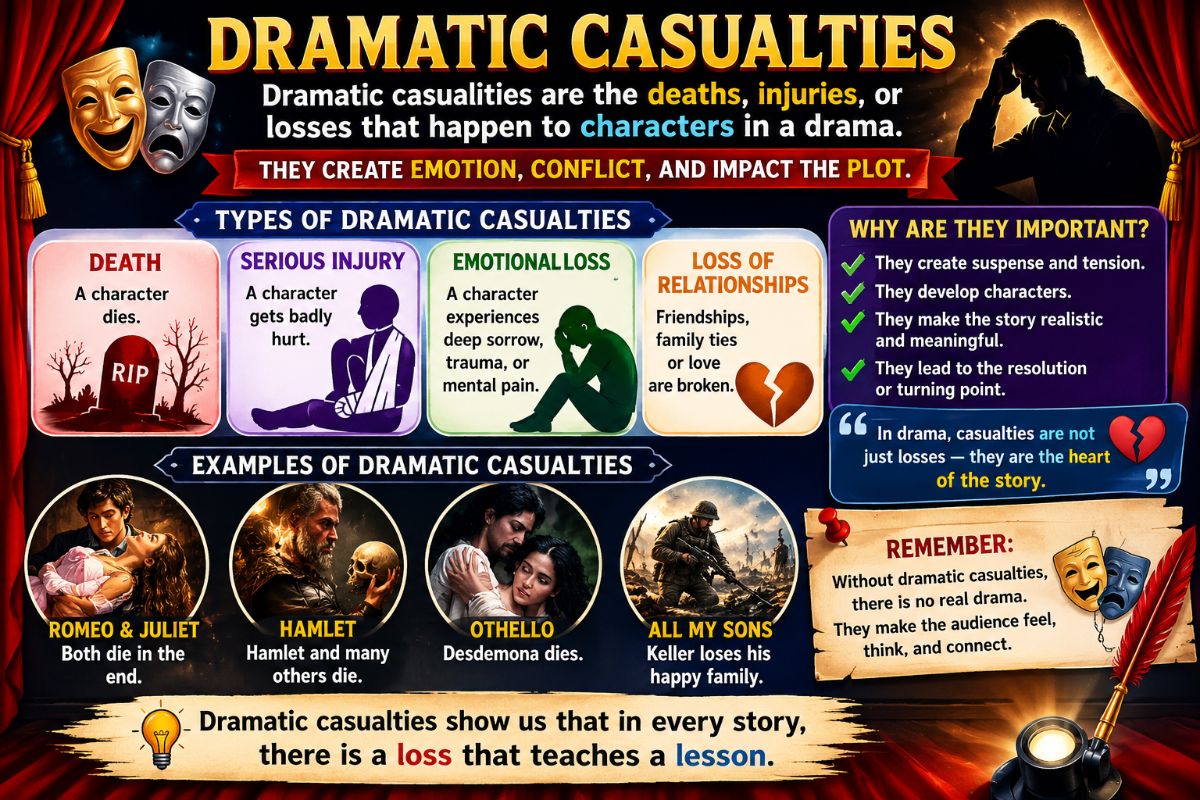
In film theory and screenwriting, dramatic causality weaves a narrative together. It sets a clear cause-and-effect relationship in motion. Event A sparks Event B, which inevitably leads to Event C. Without this causal thread, a script becomes nothing more than a haphazard array of moments. With it, though, a script evolves into a cohesive, engaging story.
Let’s look at the mechanics of dramatic causality. I’ll dive into its structure and why it matters in cinema.
1 .Character Motivation and Goals
A character must always want something
specific to justify their actions. A specific goal for the protagonist helps move the story along.
How It Builds Causality:
When a character takes action in order to achieve their goal, the status quo will be disrupted. It will force other characters to respond, or the environment to change. Without a "want," the action will become passive.
2.Conflict and Obstacles (The "But" Factor)
To prevent the story from ending because the character got what they wanted, obstacles need to be introduced. These can be external environment antagonists, or society, or be internal such as flaws or fears.
How It Builds Causality:
Obstacles will always force a character to alter their actions if they want to continue on the same path. This makes a new decision necessary. (The character wants X, but Y is in the way, therefore they attempt Z).
3.Plant and Payoff (Foreshadowing):
This technique consists of the early incorporation of a minor detail (e.g., an object, a line, a character, a trait, etc.) in the screenplay (the plant) that becomes important to the story later (the payoff)
How it builds causality:
It creates a logical connection between different time structures that is ultimately satisfying. Upon the time of payoff, the audience understands that it wasn’t arbitrary nor a *deus ex machina*; it was consequently brought about by the already established truth in the earlier developed part of the screenplay.
4.Stakes and Urgency (The Ticking Clock Or Timing,)
Stakes describe a character’s potential losses resulting from a failure, while urgency describes the pressure for immediate action, such as the presence of a ticking clock.
How it builds causality:
If a character's inaction will trigger dire consequences, then high stakes will demand every choice be made under pressure. This builds intense causality because the character's decisions are weighted, pushing the narrative quickly to the climax.
5.Information Disparity
The significant structural aspect of controlling who knows what, when, and where focuses on controlling the information flow among your audience and your various story elements. For example, this could be an information release that causes dramatic irony if the audience knows a secret that a character does not.
How does it build causality
In narrative causality, the biggest change occurs when a character learns a secret. When information that was hidden is uncovered, this change completely alters how that character/character's actions will shape the path of the screenplay. The change in perspective and renewed motivation will elicit a series of new, intense actions that defines the next phase of the screenplay.
CONCLUSION;
Ultimately, dramatic causality is what transforms a sequence of random events into a compelling, inevitable story. By shifting your focus from what happens next to “why” it happens, you give your script momentum and emotional weight.
When you master tools like the "Therefore/But" rule, character-driven obstacles, and escalating stakes, you build a narrative framework that keeps an audience hooked—because they can feel the narrative dominoes falling in real-time. A tightly woven causal chain ensures that your ending feels entirely earned, satisfying, and impossible to look away from.