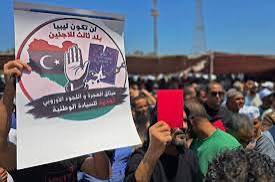
Libya’s eastern-based government has ordered a sweeping ban on the entry of citizens from Sudan, Eritrea, Ethiopia and Somalia, deepening the country’s role as a hardening frontier on one of the world’s deadliest migration routes.
The decision, issued by the Benghazi-based administration of Prime Minister Osama Hamad, applies to all land, sea and air crossings under its control. Officials said only diplomats and professionals in the health and education sectors will be exempt, a carve-out that underscores how dependent Libya’s fractured institutions remain on foreign expertise.
The eastern government is aligned with powerful military commander Khalifa Haftar, whose Libyan National Army dominates the east and much of the south, including key desert corridors used by smugglers moving people north toward the Mediterranean coast.
Authorities framed the move as a security measure aimed at curbing irregular migration and human trafficking. The announcement followed the discovery of more bodies of migrants washed ashore near an eastern Libyan city after a boat capsized off the coast, another tragedy on a route where thousands have died or disappeared in recent years.
Libya has long been a major transit hub for people fleeing conflict, repression and economic collapse across Africa and the Middle East. The United Nations estimates that more than 900,000 migrants and refugees are currently in the country, with Sudanese nationals forming the largest group. Many attempt the perilous sea crossing to Europe in overcrowded, unseaworthy vessels.
European and Libyan coast guards frequently intercept these boats and return those on board to Libya. UN investigators and human rights groups have documented systematic abuses in the country’s network of official and unofficial detention centres, including forced labour, beatings, sexual violence and torture. Critics warn that further restricting legal entry could push desperate people into even more dangerous smuggling routes and deepen their vulnerability to exploitation.
The ban also highlights the political fragmentation that has defined Libya since the NATO-backed uprising that toppled longtime ruler Moammar Gadhafi. The country remains split between a UN-recognised government in Tripoli, in the west, and the rival administration in the east, each pursuing its own security and migration policies with limited coordination.