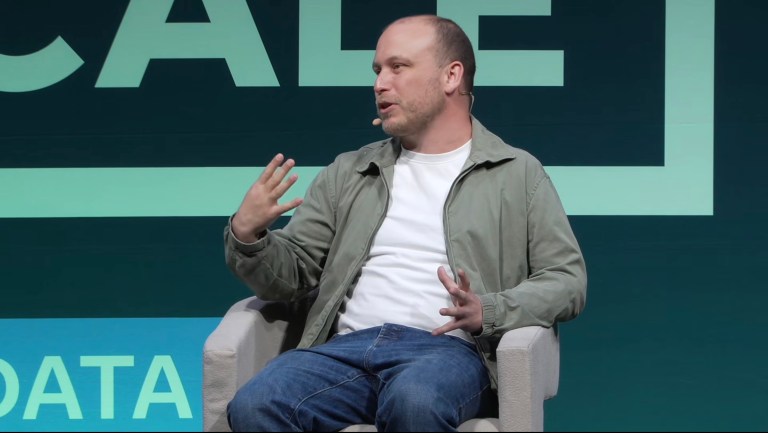
At Meta's @Scale conference, Boris Cherny, the creator of Claude Code, spoke about what he believes is the next major development in artificial intelligence: loops. When asked whether loops are simply the latest trend or a genuine breakthrough, he strongly argued that they are a significant advancement.
According to Cherny, software development has evolved rapidly over the past few years. Developers first wrote code manually, then AI agents began writing code on their behalf. Now, AI agents are increasingly being used to direct and manage other AI agents that perform the actual coding work. He believes this shift is just as transformative as the move from human-written code to AI-generated code.
Cherny explained that he already uses several AI agents working continuously in the background. Some monitor software architecture and suggest improvements, while others search for duplicated code and recommend ways to simplify it. These agents create pull requests like human developers and continue working indefinitely because the codebase is constantly changing.
The concept of AI loops is based on allowing agents to operate repeatedly without stopping, making decisions and improving their work over time. Rather than completing a single task and ending, these systems keep running and refining results. This requires a high level of trust in AI, but as models become more capable, many believe it could unlock greater productivity.
The idea itself is not entirely new. Traditional programming has long used recursive loops, where a function repeatedly calls itself until a specific condition is met. AI loops follow a similar principle, although the decision to continue or stop is often made by another AI agent rather than a predefined rule.
One popular example is the "Ralph Loop," named after Ralph Wiggum. In this approach, an AI repeatedly reviews its progress and asks whether it has successfully achieved its goal. This helps prevent the model from losing focus during lengthy tasks and encourages it to keep working until the objective is reached.
AI loops are also connected to the growing emphasis on test-time compute—the idea that many difficult problems can be solved if enough computing power is applied. By continually allocating more resources, AI systems can make steady improvements, especially in tasks such as optimizing software or refining complex projects.
However, this approach comes with a major drawback: cost. Continuous AI loops consume far more tokens and computing resources than standard chatbot interactions. Since they are designed to run indefinitely, expenses can increase significantly over time. While this may benefit companies that sell AI services, it can become costly for businesses and individuals using the technology.
Despite these concerns, supporters argue that the potential gains in productivity and automation could outweigh the financial costs, provided there are effective controls in place to manage spending, monitor performance, and reduce errors.This version keeps the original meaning while making it shorter, clearer, and easier to read.