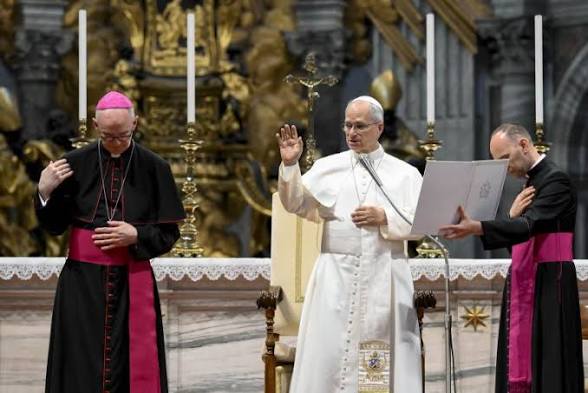
Pope Leo XIV is set to make a closely watched visit to the microstate of San Marino before addressing a major Catholic gathering in the Italian resort city of Rimini, in a trip that underscores his preference for short, symbolically charged journeys within Europe.
The pontiff will spend the morning in San Marino, a 60-square-kilometre enclave of about 33,000 people nestled in the Apennine Mountains. The visit continues a pattern of brief pastoral excursions to nearby destinations, following his earlier stop in Monaco, another small European state.
San Marino, often described as the world’s oldest republic, will host the Chicago-born pope for meetings with local authorities and a prayer service in the republic’s basilica. The encounter is expected to highlight themes of democratic tradition, religious heritage and the role of small states in a rapidly changing Europe.
From there, Leo will travel to Rimini on Italy’s Adriatic coast for the annual Meeting for Friendship Among Peoples, widely known as the Rimini Meeting, organised by the Catholic movement Communion and Liberation. The week-long event blends religion, culture and politics, drawing large crowds and a roster of high-profile speakers.
Historically associated with Italy’s now-defunct Christian Democratic party, the Rimini Meeting has long served as a crossroads for political leaders, intellectuals and church figures. Leo’s presence marks the first papal participation since Pope John Paul II attended in 1982, signalling renewed Vatican engagement with the influential gathering.
The pope is scheduled to deliver a keynote address to participants, sharing the stage with figures such as Jerusalem’s Latin Patriarch, Cardinal Pierbattista Pizzaballa, and Italy’s deputy prime ministers, Foreign Minister Antonio Tajani and Transport Minister Matteo Salvini. Observers expect Leo to touch on issues ranging from war and migration to Europe’s spiritual identity.
Before speaking, the pontiff will tour an exhibition dedicated to Saint Augustine, the fifth-century theologian whose writings shaped Western Christianity and inspired the Augustinian order to which Leo belongs. The visit is likely to underscore the pope’s intellectual roots and his emphasis on dialogue between faith and reason.
Leo will also meet people with disabilities and the sick at Rimini’s cathedral, a gesture consistent with his focus on the margins of society, before presiding over an open-air Mass at the city’s port. The trip follows recent short journeys to Pavia, Lampedusa and Assisi, reinforcing his strategy of concentrated, pastoral outreach close to home.