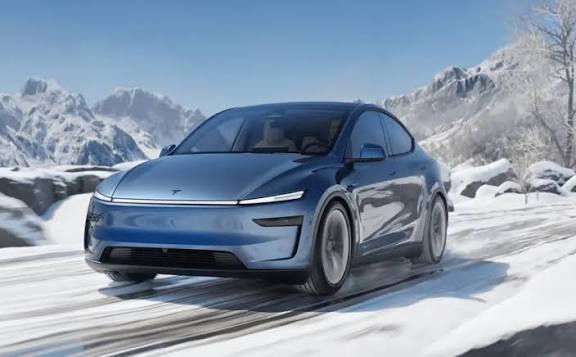
Digital insurer Lemonade is betting that software, not just human behavior, will define the future of car insurance. The company has unveiled a new product tailored specifically for Tesla owners who use the automaker’s advanced driver assistance system, Full Self-Driving (Supervised), promising to cut per-mile insurance rates by approximately 50 percent when the software is in control.
The product, which Lemonade is branding as Autonomous Car insurance, is one of the first attempts to price auto coverage based explicitly on how a vehicle’s software drives, rather than treating all miles the same. It signals a shift in how insurers may approach risk as partially autonomous systems become more capable and more common on public roads.
At the core of Lemonade’s approach is a technical collaboration with Tesla that gives the insurer access to vehicle telemetry data that was previously unavailable. While Lemonade has declined to spell out the exact data streams it receives, the company says it will use this information to train its own usage-based risk prediction models. Those models are designed to distinguish between miles driven by a human and miles driven with Full Self-Driving engaged, and then price each accordingly.
In practice, that means a Tesla owner could see different per-mile rates depending on whether they are manually driving or relying on FSD. Lemonade’s thesis is that, as the software improves, the risk associated with FSD-driven miles will fall, and so will the cost of insuring them. The company has explicitly tied its pricing to the safety performance of the system, saying that the safer FSD becomes, the more prices will drop.
That framing underscores a broader bet on Tesla’s long-running promise to deliver true self-driving capability. Despite its name, Full Self-Driving does not currently make Teslas autonomous. The system can handle many driving tasks on highways and city streets, but drivers must remain attentive, keep their hands ready, and be prepared to take over at any moment. Regulators and safety advocates have repeatedly stressed that FSD is an advanced driver assistance system, not a replacement for a human driver.
Still, Lemonade is positioning its product as a bridge to a future in which software takes on more of the driving burden. Shai Wininger, Lemonade’s co-founder and president, argues that traditional insurers are not equipped to price that future accurately. In his view, most carriers still treat a Tesla like any other car and artificial intelligence like any other driver, even though a system that can see 360 degrees, never gets drowsy, and reacts in milliseconds behaves very differently from a human behind the wheel.
Lemonade has already been experimenting with usage-based auto insurance through a pay-per-mile product, which relies on telematics to track how much and how safely customers drive. Wininger says that product gave the company a unique tech stack built to collect large volumes of real driving data and feed it into dynamic pricing models. The new Autonomous Car insurance extends that logic to a world where the “driver” is sometimes a software stack developed in Silicon Valley.
The product is rolling out first in Arizona, with Oregon to follow. Lemonade already offers more conventional auto insurance in a number of states, including Arizona, California, Colorado, Illinois, Indiana, Ohio, Oregon, Tennessee, Texas, and Washington, for what it describes as most popular cars. The FSD-focused coverage, however, is more specialized and depends on the company’s ability to ingest and interpret Tesla’s telemetry.
That dependence raises questions about data access, privacy, and control. Usage-based insurance has long relied on telematics devices or smartphone apps to monitor driving behavior, but direct technical collaboration with an automaker goes a step further. It suggests a future in which carmakers and insurers are more tightly intertwined, with software updates, sensor data, and even onboard decision-making feeding directly into how policies are priced and claims are evaluated.
For Tesla, the partnership with Lemonade comes against a complicated backdrop in the insurance world. The automaker has been selling its own branded insurance in several states, pitching it as a more transparent, real-time alternative that uses Tesla’s safety scores and driving data to adjust premiums. But that effort has faced scrutiny. In California, regulators brought an enforcement action against Tesla and its partner State National Insurance Company, accusing them of egregious delays in responding to policyholder claims, unreasonable denials, and unfair claims settlement practices. Tesla has denied those allegations, but the case highlighted the challenges of an automaker trying to reinvent insurance while also managing rapid growth, software rollouts, and safety controversies.
Lemonade’s move illustrates how third-party insurers see opportunity in that same space. Rather than building cars, Lemonade is focused on software, data science, and regulatory navigation. Its business model has always leaned heavily on automation and artificial intelligence, from underwriting to claims handling. Extending that philosophy to autonomous and semi-autonomous driving is a logical next step, but it also pushes the company into relatively uncharted territory.
One of the biggest unknowns is how regulators will respond as insurers begin to differentiate more sharply between human-driven and software-driven miles. If an accident occurs while FSD is engaged, questions of liability can quickly become complex. Is the human driver at fault for failing to supervise properly? Is Tesla responsible for a software error? How should an insurer allocate risk and cost when control is shared between human and machine?
Today, most legal frameworks still place primary responsibility on the human driver, even when advanced driver assistance systems are active. But as systems like FSD become more capable and more widely used, pressure is likely to grow for clearer rules about who pays when things go wrong. Insurers like Lemonade, which are building products around those systems, will be at the center of that debate.
There is also a competitive dimension. If Lemonade can reliably show that FSD-driven miles are safer and cheaper to insure, it could attract Tesla owners frustrated with high premiums from traditional carriers that treat the vehicles as high-risk due to their repair costs and performance characteristics. On the other hand, if high-profile crashes or regulatory actions undermine confidence in FSD, products that lean heavily on its safety record could face headwinds.
For now, Lemonade is framing its Autonomous Car insurance as a way to align incentives. If safer software leads directly to lower premiums, both the automaker and the insurer have a financial reason to improve and validate the technology. Tesla gets another proof point for its argument that FSD reduces accidents, while Lemonade gets a differentiated product in a crowded auto insurance market.