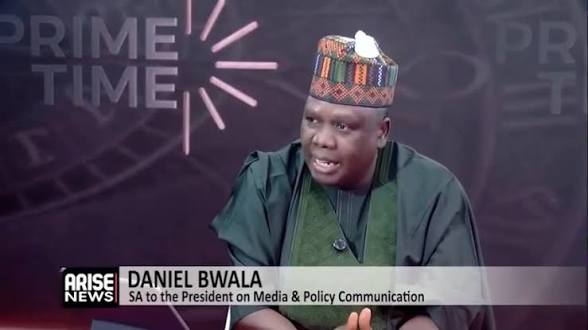
Presidential media aide Daniel Bwala says many Nigerians are finding it difficult to feel any real improvement in their daily lives because the country’s vast population is stretching government resources far beyond capacity.
Bwala, Special Adviser to President Bola Ahmed Tinubu on Media and Policy Communication, explained that while the administration has ramped up revenue and embarked on wide-ranging economic reforms, the gains are being diluted by the sheer size of Nigeria’s population, estimated at more than 230 million people.
He said the federal government is contending with decades of underinvestment in infrastructure and social services, meaning that even with higher earnings, the available funds are still insufficient to quickly transform living conditions nationwide.
“The answer is simply population and resources. The population is over 230 million. The resources we have, however, even with the increased revenue, are not enough to match the population and the deficit in terms of infrastructure. So, growth will inevitably be slow, but it will be slow, steady, and consistent,” Bwala said during a televised interview.
He argued that the impact of the reforms is already emerging, but more visibly at the subnational level, where state governments are receiving larger monthly allocations from the federation account. According to him, these increased transfers are enabling governors to fund more projects and improve administration, even if the changes are not yet dramatically reflected in household incomes.
“When you talk about the increased revenue, the effect of that increased revenue is the higher allocation to states, which has resulted in state administration improvements and has also impacted the people,” he stated.
Bwala’s comments come amid widespread public frustration over rising living costs, high inflation, and persistent unemployment, with many citizens questioning the benefits of the current economic direction. He maintained that the reforms are designed for long-term stability rather than instant relief, insisting that Nigerians will gradually see improvements as investments in infrastructure, social programmes, and state-level projects begin to mature.
He also suggested that managing population growth and improving resource efficiency will be critical if the government is to translate macroeconomic gains into tangible improvements in the lives of ordinary Nigerians.