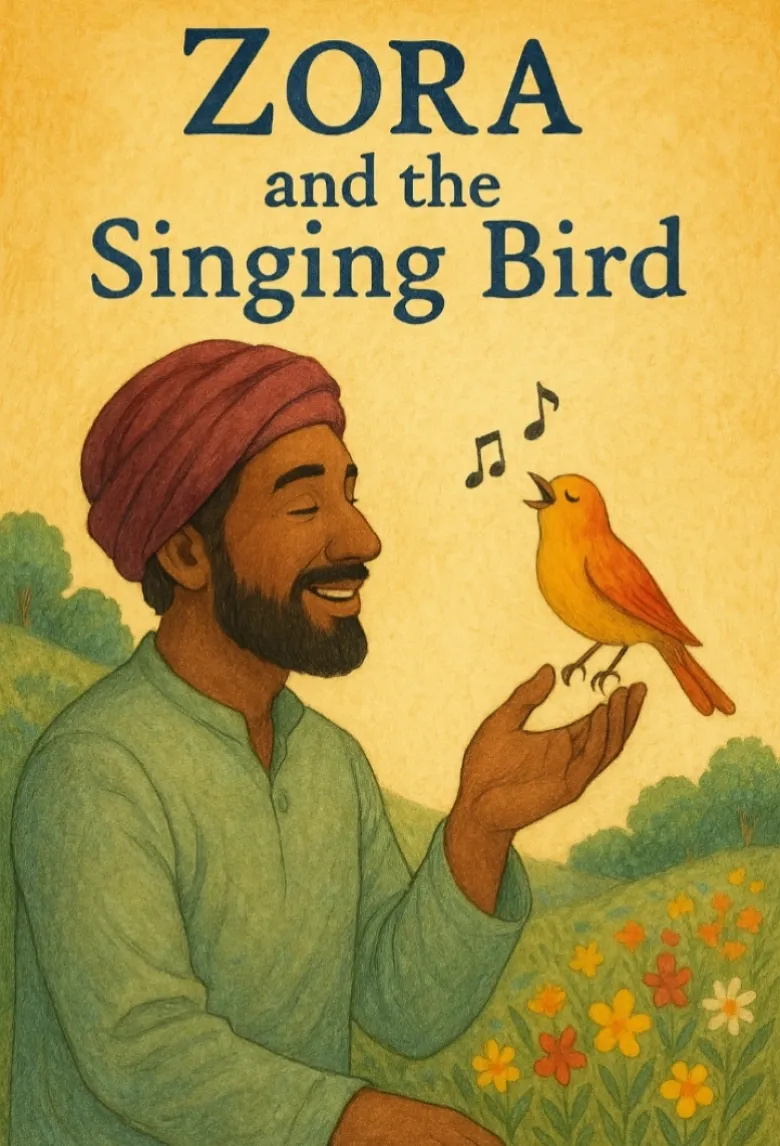
In the humble town of Kambili, there lived a poor farmer named Zora. His days were spent toiling under the sun, yet his hard work bore little fruit. The villagers whispered that he was cursed, and though some pitied him, offering food from their own farms, others avoided him.
Zora was a man of patience and humility, despite his misfortunes. Years ago, his wife had passed away, leaving him alone to care for their two sons, Tano and Jari. No woman wished to marry a man as destitute as he, so Zora bore his burdens in solitude, doing his best to raise his boys with kindness and integrity.
One fateful year, a terrible famine fell upon Kambili. The rivers dried, the soil cracked, and the livestock perished. The villagers, desperate for relief, made countless offerings to the gods, but their pleas went unanswered. Even the mighty king of Kambili was helpless, seeking aid from neighboring villages, but none could spare enough food to end their suffering.
One evening, as hunger gnawed at his stomach, Zora wandered to his barren farm, hoping against hope to find something, anything to feed his sons. That was when he heard it. A song. Sweet and sorrowful, yet filled with a strange magic.
Zora followed the melody and found a magnificent bird perched on a low branch. Its feathers shimmered like the sun on a river’s surface, and its golden eyes gleamed with wisdom.
Overcome with wonder, Zora reached for his knife, thinking of the meal it could provide. But before he could strike, the bird spoke.
“Do not harm me, kind farmer,” it pleaded.
“If you spare my life, I shall grant you all that you desire.”
Zora staggered back, his heart racing. “You…you can talk?”
“I can,” the bird replied. “And I can grant you wealth beyond your wildest dreams.”
Torn between disbelief and desperation, Zora hesitated but his hunger, and his children’s suffering, made the choice for him. He carefully carried the bird home and locked it inside a sturdy wooden cage.
From that night on, the bird granted Zora’s every wish. Golden coins appeared at his feet, sacks of grain filled his empty storage, and his once despised name became revered throughout the village. Soon, people gathered at his doorstep, seeking his generosity and wisdom.
No longer the poor farmer of Kambili, Zora found himself respected, even envied. His sons, who had once gone to bed with empty bellies, now wore fine clothes and played with the noble children.
Yet Zora, fearing that someone would steal his secret, told no one of the bird. He warned his sons never to touch the cage, never to speak of the strange songs that echoed from within.
For many moons, Kambili flourished under Zora’s newfound prosperity. But fortune, like the seasons, is never permanent. One day, while their father was away, curiosity overtook Tano and Jari. The cage sat there, as it always had, the golden bird gazing at them with knowing eyes.
“Father never lets us see it up close,” Tano whispered. “Let’s take a better look.”
Jari hesitated, but excitement won over caution. As they unlatched the cage, the bird flapped its radiant wings and soared through the open window. The boys gasped in horror, realizing their mistake.
When Zora returned and saw the empty cage, despair filled his heart. He ran out, searching the skies, calling for the bird to return but it was too late. The singing bird of Kambili had vanished, never to be seen again by man.
Yet, as the villagers gathered to console the grieving farmer, they noticed something miraculous. The rivers once again flowed with clear, cool water. The soil, which had been dry and lifeless, turned rich and fertile. Crops sprouted overnight, and the famine that had plagued Kambili for so long was lifted.
Zora, though saddened by the loss of his wondrous bird, wept with gratitude. He had been given what he needed, even if he had not kept what he wanted.
And so, the tale of Zora and the singing bird was passed down through generations, never to be forgotten.