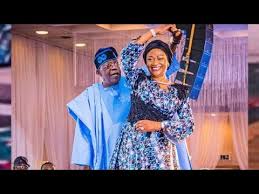
President Bola Ahmed Tinubu stirred laughter and fresh debate after playfully referring to his wife, First Lady Oluremi Tinubu, as “Iya Alakara” during a presidential press corps dinner at the State House in Abuja.
The light-hearted remark came as the president observed protocol and acknowledged dignitaries at the event. Turning to his wife, he said, “Good evening, gentlemen of the press, ladies and gentlemen, my dear wife, the First Lady, Iya Alakara,” prompting an audible reaction from the audience and visible smiles across the hall.
The phrase “Iya Alakara,” which translates from Yoruba as “mother who sells akara,” was a pointed nod to an earlier controversy involving the First Lady. Remi Tinubu had previously urged low-income Nigerians to consider small-scale enterprises such as selling akara, roasting corn or producing kuli-kuli as a way to cushion economic hardship. Her comments drew mixed reactions nationwide, with critics accusing her of being insensitive to the scale of the country’s economic challenges, while supporters argued she was promoting entrepreneurship and self-reliance.
By invoking the nickname in public, President Tinubu appeared to reclaim and soften the label, framing it as an affectionate joke rather than a political liability. Observers at the dinner noted that the First Lady smiled as the crowd responded, suggesting she was in on the jest.
The moment, captured on video and widely circulated online, quickly became a talking point on social media. Some users interpreted the president’s remark as an attempt to show that his family is unfazed by criticism and willing to laugh at themselves. Others saw it as a reminder of the economic pressures that gave rise to the original backlash, arguing that humour does not erase public frustration over rising costs and limited job opportunities.
Political analysts say the exchange highlights how symbolism and language have become central to the Tinubu administration’s public image. In a climate of economic strain, even a casual nickname can carry weight, reflecting broader tensions between government messaging and everyday realities.
For the presidential couple, however, the evening’s banter projected a united and relaxed front, with the First Lady’s “Iya Alakara” moniker now firmly embedded in Nigeria’s evolving political lexicon.