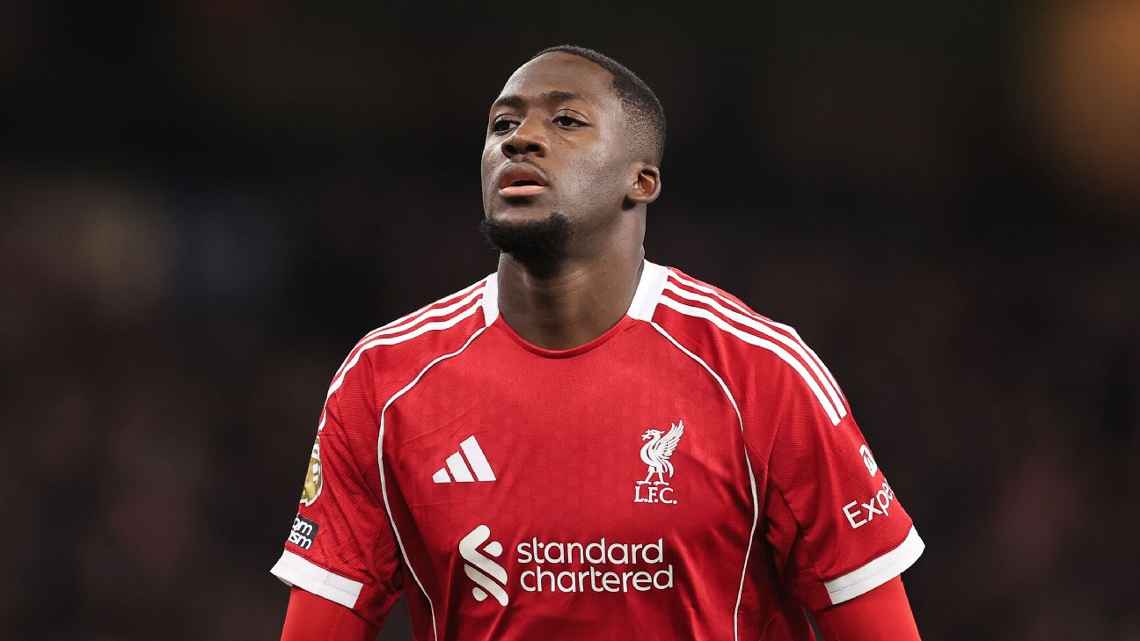
Ibrahima Konaté has revealed the depth of the emotional turmoil he endured during a harrowing year marked by the deaths of teammate Diogo Jota and his father, Hamady, describing how grief pushed him toward depression even as he tried to perform at the highest level of the game.
The France international admitted that his form on the pitch deteriorated as he tried to process the sudden loss of Jota, a close friend and neighbour, in a car crash on the eve of preseason. The shock, he said, left him numb.
“It devastated me. I didn’t have any interest in anything else at that point. You go back to football because you have no choice. We’re employees at a club that pays us every month, so we have duties. We had no choice but to go back on the field and play for him and his family, as well as ourselves. There’s no way of getting over it, but you learn to live with it.”
As Liverpool mourned Jota, Konaté was quietly carrying another burden: his father’s serious illness. The defender said he felt torn between family and club, unsure how to respond as his private life unravelled.
“I didn’t know what to do. I didn’t know whether I should go home and stop playing, because the team needed me too. I didn’t know who to talk to about it, so I kept it all to myself.”
Hamady Konaté died after a long illness, and only then did the scale of the player’s inner struggle become clear. Konaté spoke candidly about how grief and pressure combined to drag him into a dark place.
“There are low points, there’s depression. You can suffer from depression in football too; there’s no need to be ashamed to say so. Depression is personal; it’s deep inside you. When you’re depressed, it starts in the heart, goes up to the brain and takes over your whole body. For me, that’s what’s hard, and we need to talk about it.”
He urged others not to repeat his mistake of suffering in silence. “When you’re feeling down or something’s going on, you need to talk to those around you. It can help you and do you good.”
Konaté briefly stepped away on compassionate leave but returned after calling head coach Arne Slot, even scoring on an emotional comeback at Anfield. Yet he admitted he never truly felt healed.
“All of these tragic events happened so quickly and as soon as I felt like I was getting my head above water, something else happened. I had the support of the fans, my teammates and my family, but I also had to learn how to get back on my feet on my own because the team needed me more than ever and I know that my father would have wanted me to get back.”