Across tech and traditional industries alike, a new class of founders is quietly getting rich with artificial intelligence. They are not the ones juggling a dozen tools or spending nights perfecting prompts. Instead, they are using AI in one or two places where it multiplies money, not workload.
The pattern starts with a simple question: what is the one barrier that keeps most people locked out of a lucrative market? For software, it was “I can’t code.” No-code AI builders turned that sentence into an opportunity. By letting anyone describe an app in plain language and ship a working product, they didn’t just add AI to an existing business. The barrier itself became the product.
Variations of this move are appearing everywhere. In e-commerce, solo founders use AI to handle product research, listing optimization, and ad creative, while they focus on supplier relationships and brand. In consulting, one-person firms deploy AI to do the heavy analytical lifting, then sell high-touch strategy at a premium. In media, lean teams use AI to test headlines, formats, and distribution, but keep humans on narrative, voice, and relationships with audiences and sponsors.
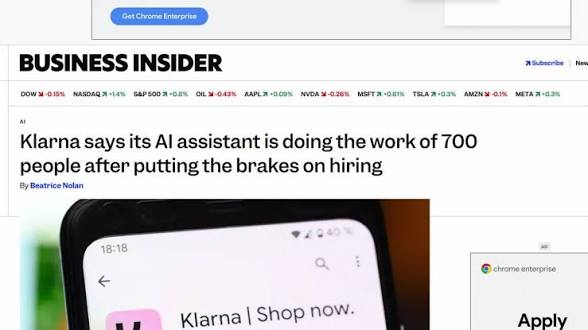
What separates the winners is not enthusiasm for automation but discipline. They point AI at their highest-value constraint: the task that is both painful and directly tied to revenue. Everything else is left stubbornly human. That is why some companies that replaced hundreds of support agents with chatbots later reversed course. The savings were real, but so was the damage to trust in complex, emotional conversations. The lesson: use AI where precision and scale matter more than empathy, and protect the moments where relationships are built.
Data from major business surveys now shows a widening gap between operators who treat AI as a leverage engine and those who treat it as digital glitter. The first group reports meaningful revenue gains; the second mostly reports more noise.
For individuals, the playbook is emerging. Identify the bottleneck that keeps most people from entering or scaling in your niche. Use AI to remove that single barrier so thoroughly that what used to require a team, capital, or rare skills can now be done by one person with a laptop. Charge for the unlocked access, not the underlying technology.