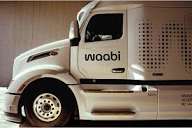
Autonomous driving startup Waabi is making an aggressive move beyond trucking, raising $1 billion and signing an exclusive robotaxi partnership with Uber that could put tens of thousands of self-driving cars on city streets.
The deal combines a $750 million oversubscribed Series C round, co-led by Khosla Ventures and G2 Venture Partners, with up to $250 million in milestone-based capital from Uber. In return, Uber secures exclusive access to deploy at least 25,000 robotaxis powered by Waabi Driver on its ride-hailing platform, marking Waabi’s first major push into passenger mobility.
The partnership is a high-profile test of Waabi’s core claim: that a single, generalizable AI stack can scale across multiple autonomous driving markets. While rivals such as Waymo and Aurora have struggled to profitably juggle both freight and robotaxis, Waabi founder and CEO Raquel Urtasun argues that her company’s simulation-heavy, software-first approach changes the economics.
At the heart of that pitch is Waabi World, a closed-loop simulator that builds digital twins of real-world environments, generates edge-case scenarios, and trains the Waabi Driver to learn from its own mistakes with minimal human intervention. Urtasun says this allows the system to reason more like a human driver, adapt to new situations with far less data, and avoid the massive fleets and armies of safety drivers that defined the first wave of autonomous vehicle development.
Waabi has so far focused on long-haul trucking, running commercial pilots with safety drivers in Texas and working with Volvo to develop purpose-built autonomous trucks. The company says its underlying “Waabi Brain” already generalizes across vehicle types, and it has been quietly collecting and simulating passenger car data alongside its freight work, signaling that robotaxis were always part of the roadmap.
The Uber deal also marks a personal return for Urtasun, who previously served as chief scientist at Uber’s autonomous vehicle unit before it was sold to Aurora. Uber has since shifted from building its own self-driving tech to acting as a platform for multiple AV partners, including Waymo, Nuro, and others. Waabi now joins that roster with one of the most capital-efficient war chests in the sector, bringing its total funding to about $1.28 billion.
Waabi plans to integrate its sensors and software directly on factory lines with an automaker partner, pursuing a vertically integrated, fully redundant platform that Urtasun argues is essential for safety and scale. Specific launch cities and timelines for Uber robotaxis remain under wraps, but both companies are positioning the deal as a foundation for rapid expansion once regulatory and technical hurdles are cleared.