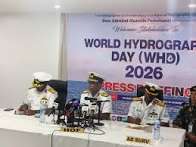
The Hydrographer of the Federation and Chief Executive Officer of the National Hydrographic Agency, Rear Admiral Olumide Fadahunsi, says Nigeria’s ambition to build a thriving blue economy depends on how quickly it modernises the way it collects and shares ocean data.
Addressing journalists in Abuja, Fadahunsi described hydrography as the foundation of maritime safety, ocean governance and environmental protection. He stressed that accurate nautical charts and ocean-data products derived from modern surveys are indispensable for safe navigation, port expansion, offshore energy projects, submarine cables and pipelines, fisheries management and coastal-resilience planning.
He explained that Nigeria’s preparations for the 2026 World Hydrography Day would focus on transforming ocean data into practical tools for decision-makers. The country plans to formally mark the day in Lagos, in line with the International Hydrographic Organisation’s global programme.
According to him, the theme chosen by the IHO was deliberately framed in clear, non-technical language to attract policymakers, industry leaders, academics and the wider public, not just hydrographic and navigation specialists. This, he said, is crucial if hydrography is to influence national planning and investment decisions.
Fadahunsi highlighted the strategic shift towards S-100-based data services, particularly S-101 Electronic Navigational Charts and S-102 Bathymetric Surface products. These standards underpin the International Maritime Organisation’s acceptance of S-100 Electronic Chart Display and Information Systems as a recognised means of navigation in international shipping.
By adopting these modern standards and improving how ocean data is organised, standardised and shared, Nigeria can reduce navigational risks, cut shipping delays, support efficient maritime trade and contribute to regional efforts to keep sea lanes safe, he said.
The centrepiece of Nigeria’s 2026 commemoration will be a plenary session in Lagos, bringing together experts, researchers, policymakers, hydrographic authorities, industry partners and development agencies. The session is expected to produce concrete recommendations on improving ocean-data sharing, strengthening maritime administration and unlocking blue economy opportunities across Africa.
Fadahunsi linked Nigeria’s efforts to global frameworks such as the United Nations Sustainable Development Goal 14 on Life Below Water and the UN Decade of Ocean Science for Sustainable Development. By embracing the IHO theme and implementing modern hydrographic standards, he said, Nigeria aims to position itself as a key contributor to global initiatives that use better ocean information to enhance shipping safety, protect coastal communities and safeguard the marine environment.