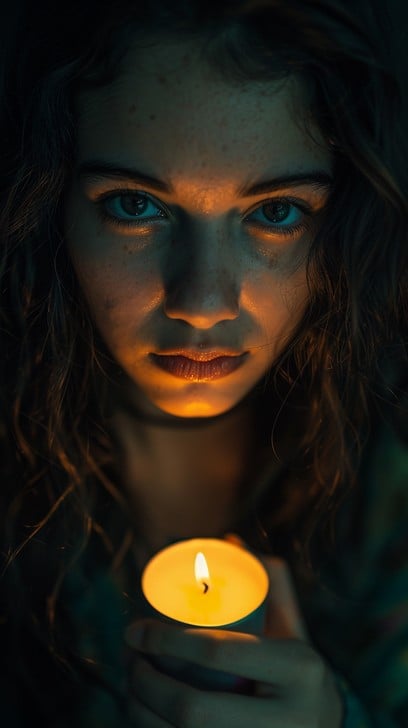
The Last Candle
The village of Oba-Ume had lived in darkness for decades. The only source of light was a small fire that burned in the town square, guarded by elders and fueled by whatever wood or oil they could find. People whispered that if the flame ever died, the entire village would perish.
In the center of this despair lived Nneka, a 19-year-old girl born on a stormy night when the flame nearly went out. Her father, a woodcutter, died searching for firewood. Her mother, a weaver, sold her last cloth to buy oil for the flame. Nneka grew up watching sacrifices pile on top of sacrifices—all to keep the fire alive.
But Nneka hated the fire. To her, it was not a blessing but a curse. Children were hungry because their parents abandoned farms to search for fuel. Old men limped through the forest and never returned. The flame consumed the future of the people, yet no one questioned it.
One night, during the Harmattan, a great wind swept through Oba-Ume. The flame flickered dangerously. Elders screamed, women wept, men rushed to pour the last of their oil. Still, the fire shrank to a single, trembling spark. And then—silence. The flame died.
The village fell into a darkness so deep it felt alive. People clawed at the air, wailing, “We are finished!” But in the middle of that despair, Nneka rose. From under her wrapper, she pulled out a small candle—the last one her father had given her before he died. He had told her, “Child, light is not in the fire we worship, but in the courage we carry.”
With trembling hands, she lit the candle. A weak, fragile glow spread, pushing the shadows back inch by inch. At first, the villagers scoffed—what could one candle do? But as they drew closer, they saw something they had not seen in years: hope in a girl’s eyes.
Nneka lifted the candle high and said, “The flame was never our master. It was only a mirror. Light is in us.”
Her courage spread like wildfire. One by one, villagers brought their hidden candles, lanterns, and sparks they had hoarded in fear. Soon, the square blazed brighter than ever before—not because of one sacred flame, but because the people finally realized their strength was in unity, not worship of a single fire.
That night, Oba-Ume was reborn.
And in the annals of history, it was not written that a fire died, but that a girl lit the world with one candle.