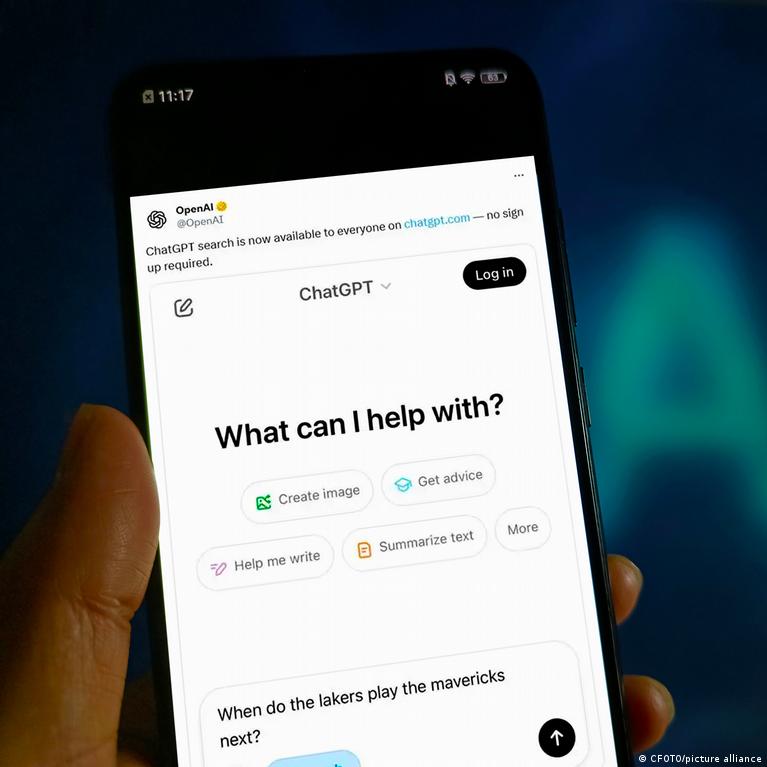
There’s a funny thing happening quietly in the world, especially around students, small business owners, tired professionals, and people who just want to sound correct online.
Everyone has a ChatGPT now.
Not in their house. Not sitting on their bed. But somewhere between panic and “let me just check something,” they open an app and start typing like their life depends on it.
You’ll see someone struggling with an assignment at midnight. Brain empty. Deadline close. Instead of crying, they type:
“Please explain this like I’m five.”
Five minutes later, confidence is restored.
Another person is staring at their phone, rewriting the same WhatsApp message ten times. They don’t want to sound rude. They don’t want to sound desperate. They don’t want to sound unserious. Finally, they give up and ask:
“Can you help me rephrase this?”
Suddenly, peace.
This is how dependency starts — gently, quietly, without drama.
Nobody wakes up and says, “Today, I will depend on artificial intelligence.” It just happens. Slowly. Naturally. One question today. Two tomorrow. Then one day you hear someone say, “Let me ask ChatGPT first,” like it’s a trusted elder in the room.
And what’s funny is that most people don’t even think of it as science or technology anymore.
They think of it as help.
Technology has moved closer to everyday life. It’s no longer something you admire from afar. It’s something you talk to when you’re confused.
Think about it.
People now use ChatGPT to:
- Break down complex topics into simple words.
- Plan businesses.
- Create content.
- Explain things they were too shy to ask in class.
Some people even use it to think.
That’s the part nobody likes to admit.
Sometimes the mind is full. Sometimes it’s tired. And in that moment, instead of forcing clarity, people lean on a tool that organizes thoughts calmly and clearly.
No shouting. No judgment. No “you should have known this.”
Just answers.
But here’s where it gets interesting — and a bit funny.
People depend on ChatGPT, yet they don’t fully trust it. They’ll say things like,
“Is this correct?”
“Are you sure?”
“Don’t lie to me.”
As if it has personal intentions.
Somehow, a tool created from data and algorithms has entered the emotional space of humans. People ask it questions they won’t ask friends because friends might judge. They ask it things they won’t ask lecturers because they don’t want to look slow. They ask it things Google would answer too broadly.
ChatGPT becomes the middle ground.
Not human. Not machine. Just… helpful.
But dependence always comes with a small risk.
The more people rely on tools to think, the more they forget to pause and think for themselves. Not because they’re lazy — but because convenience is sweet. Why struggle when something can help you structure your thoughts faster?
That’s the tension science and technology always bring.
Technology solves problems, but it also changes habits.
Calculators didn’t kill math, but they changed how people calculate. GPS didn’t kill navigation, but people now panic without it. ChatGPT won’t kill thinking — but it will definitely shape how people think, write, and communicate.
And honestly? That’s not entirely bad.
When used well, it frees the mind from stress. It helps people learn better. It makes information more accessible. It gives people confidence to express themselves clearly, especially those who struggle with words.
But when used blindly, it can make people forget that they still have a brain of their own.
So the real lesson isn’t “don’t use ChatGPT.”
That would be unrealistic.
The lesson is balance.
Use it to understand, not to replace understanding.
Use it to organize ideas, not to avoid thinking.
Use it as support, not as your entire personality.
Because at the end of the day, ChatGPT doesn’t attend lectures. It doesn’t live your life.
It just responds.
So yes, many people are dependent now.
Some a little. Some a lot.
Some won’t admit it.
But the smartest ones?
They use the tool — without letting the tool use them.