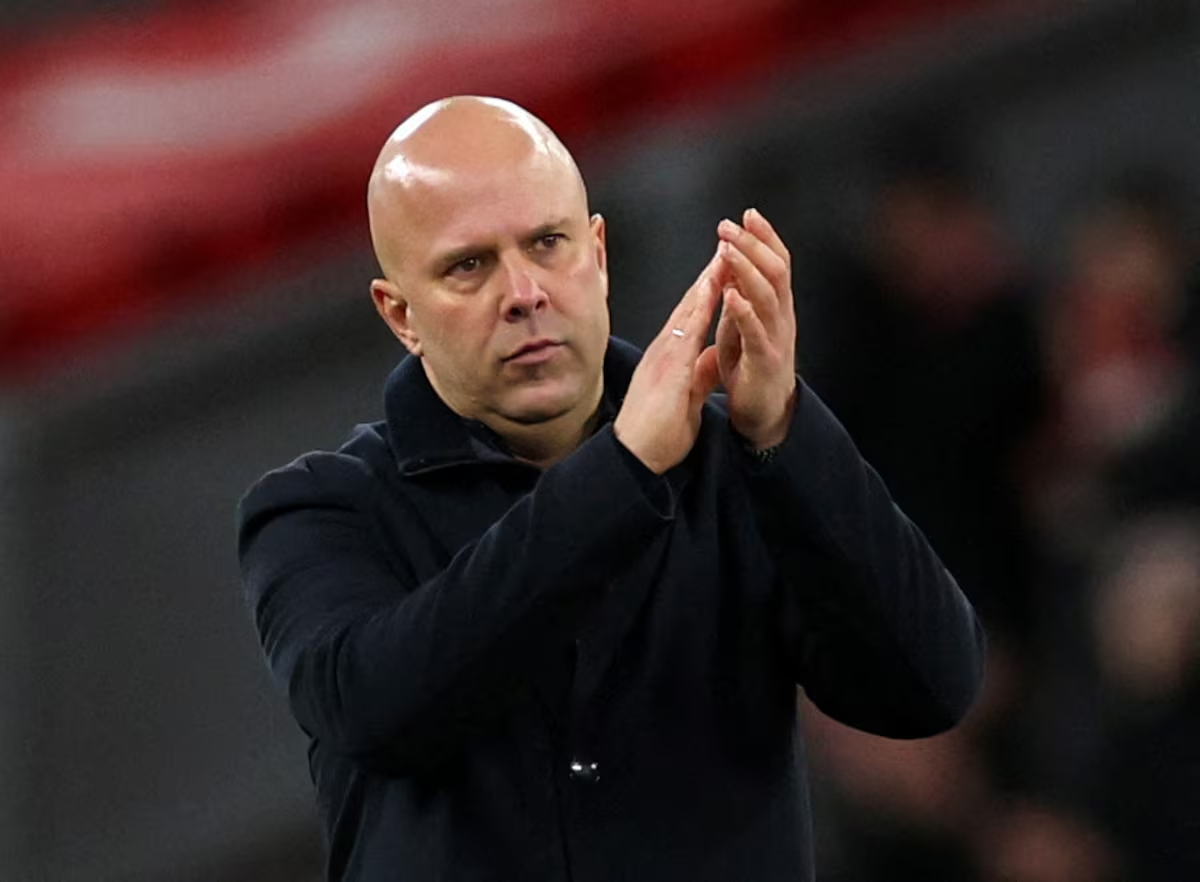
Liverpool lost 3-2 to Bournemouth, ending a 13-game unbeaten run and marking their seventh league defeat of the season. The result leaves them vulnerable in the race for a top-four position, with rivals holding games in hand.
Head coach Arne Slot stated that the team “only have ourselves to blame,” while also identifying three main external factors: fixture congestion, adverse weather conditions, and a growing injury list. The defeat followed an away Champions League match and win at Marseille, with only two days between fixtures. Slot argued that this short recovery window contributed to physical fatigue in the final stages, when Bournemouth’s pressure increased.
Slot noted that several players appeared to run out of energy late in the match. He highlighted that Liverpool were, in his view, the only Champions League side given just two days between European and domestic fixtures in this period, implying a competitive disadvantage in terms of recovery and preparation.
Weather conditions at Bournemouth were described as difficult, particularly the wind. Both Slot and captain Virgil van Dijk referenced the swirling wind as a factor in defensive errors. Van Dijk misjudged the flight of the ball for Bournemouth’s first goal, played Alejandro Jimenez onside for the second, and then collided with Curtis Jones in the sequence leading to Amine Adli’s stoppage-time winner. Van Dijk accepted responsibility for the first goal while noting the difficulty of judging the ball in the wind. Slot argued it was not entirely fair to attribute that goal solely to Van Dijk, given the conditions affecting both teams.
Injuries further complicated Liverpool’s situation. Joe Gomez sustained a knee problem in a collision with goalkeeper Alisson Becker during the move that led to Bournemouth’s opener. With Gomez impaired and no immediate stoppage to facilitate a substitution, Liverpool effectively played with 10 functional outfield players and conceded again before the change could be made.
Gomez’s issue adds to an existing injury list that includes Conor Bradley, Federico Chiesa, Alexander Isak, Ibrahima Konate, Giovanni Leoni, and Stefan Bajcetic. Slot indicated that these absences, combined with the dense fixture schedule, have forced him to rely heavily on a limited core of players, reducing his capacity to rotate and manage workloads.
As an example of workload management, Slot cited his decision to limit the use of Hugo Ekitike, stating he effectively has only one available centre forward for the coming weeks and months and must preserve that player’s fitness.
Despite outlining these constraints, Slot repeatedly returned to the issue of internal responsibility. He maintained that Liverpool had sufficient control of the match and created enough opportunities to avoid defeat. The outcome, in his assessment, was primarily the result of their own errors, with external factors such as wind, scheduling, and injuries acting as contributing but not decisive causes.