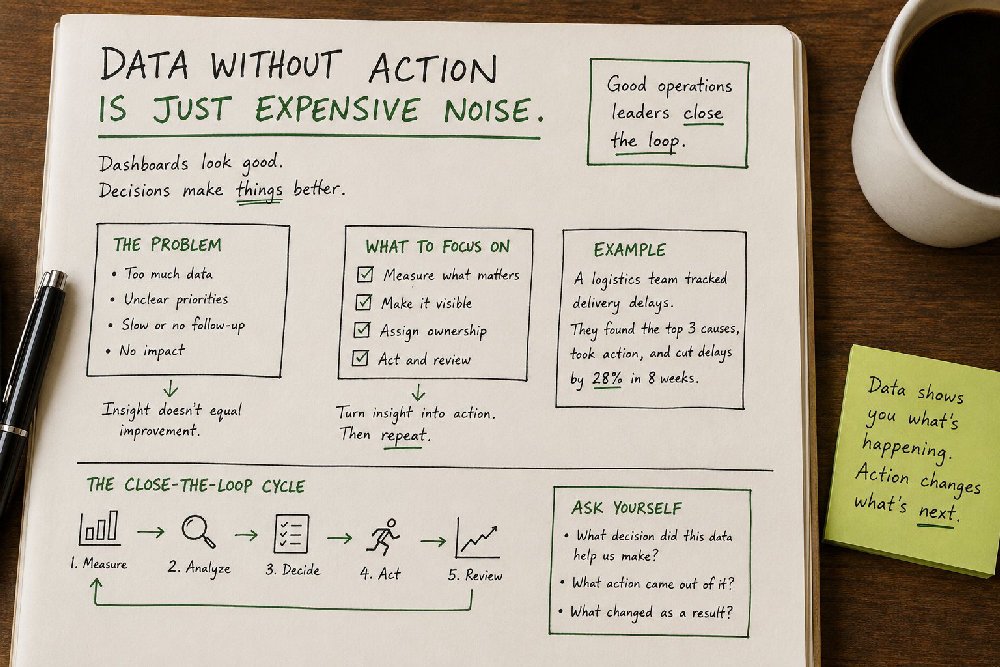
European manufacturers are pouring investment into digital twins, IIoT sensors, and predictive maintenance; and the smart ones have realized the bottleneck isn't the technology. It's that nobody redesigned who's responsible for what once the machines start talking back.
A predictive maintenance system can flag a failing part three weeks before it breaks. That's useless if the alert lands in an inbox nobody owns, or if the technician who gets it doesn't have the authority to pull the line for a fix. The tech works. The organisational chart doesn't.
This is the shift happening across European operations right now: teams moving from "humans do the work" to "humans supervise the work" reading dashboards, setting guardrails, making the judgment calls the system can't. That's a different job. It needs different training, different incentives, and often a different kind of person in the seat.
The lesson: Before you invest in smarter systems, get honest about your organisational design.
Who owns the alert?
Who has authority to act on it?
If the answer is "it's unclear" or "whoever's around," the technology will outperform your team's ability to use it and you'll have paid for insight nobody acts on.
Automation doesn't remove the need for clear roles. It raises the price of not having them.
Has your team ever had the data to prevent a problem and still missed it because ownership wasn't clear?