Introduction
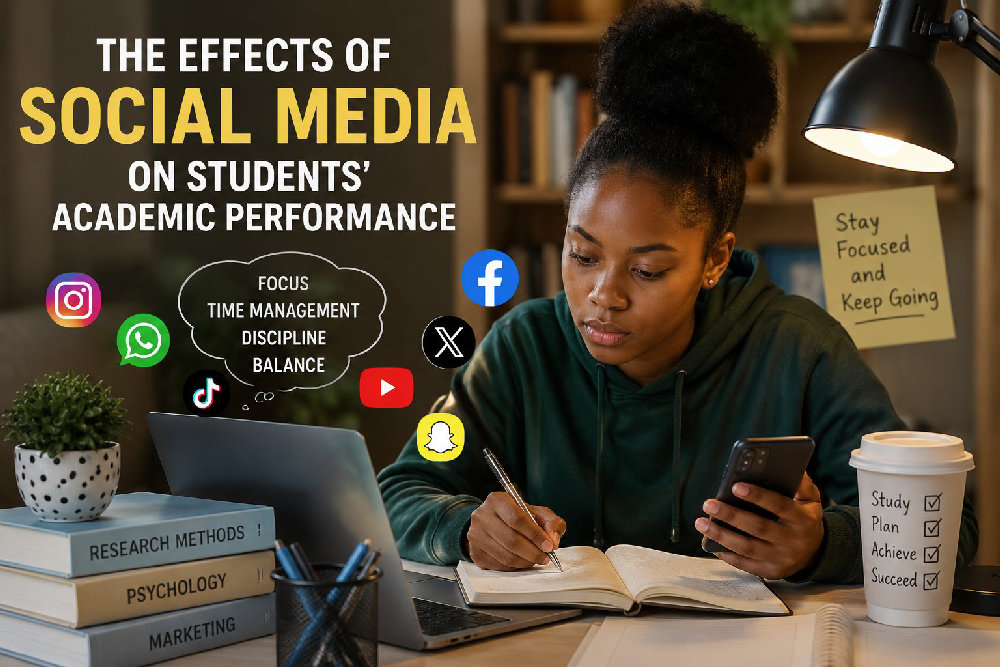
Social media has become an important part of modern life, especially among university students. Platforms such as WhatsApp, Facebook, Instagram, TikTok, X, and YouTube allow students to communicate, share information, learn new things, and entertain themselves. With the widespread use of smartphones and internet access, students can connect with people and access information from almost anywhere.However, social media can have both positive and negative effects on students’ academic performance. When used responsibly, it can support learning and improve communication. On the other hand, excessive or of the major problems is distraction. Students may intend to spend a few minutes checking social media but end up spending a long period watching videos, chatting, or scrolling through posts. This reduces the amount of time available for studying.Another problem is procrastination. Some students may postpone assignments or revision because they are busy using social media. Instead of completing an academic task, they may continue browsing social media and eventually rush to complete their work close to the deadline.Social media can also affect students’ concentration. Constant notifications and messages can interrupt reading or studying. A student who frequently checks their phone while studying may find it difficult to concentrate fully on the material.Furthermore, social media can expose students to misinformation. Not every piece of information shared online is accurate. Students who depend on unreliable online information without checking credible sources may use incorrect information in assignments or examinations.Excessive social media use may also interfere with sleep when students stay online late at night. Poor sleep can make it more difficult to concentrate and participate effectively in academic activities the following day.
How Students Can Use Social Media Responsibly
Students do not necessarily have to avoid social media completely. Instead, they should learn to use it responsibly. They can create specific periods for studying and separate those periods from entertainment or social-media activities.Students should also turn off unnecessary notifications while studying and avoid using social media when completing important academic tasks. Following reliable educational pages and using social media for academic discussions can make it more useful.Most importantly, students should learn to balance their academic responsibilities with their social lives. Social media should be treated as a tool rather than something that controls their time.
Conclusion
In conclusion, social media has a significant influence on students’ academic performance. It can provide educational resources, improve communication, encourage collaboration, and help students develop digital skills. However, excessive use can lead to distraction, procrastination, poor concentration, misinformation, and reduced study.