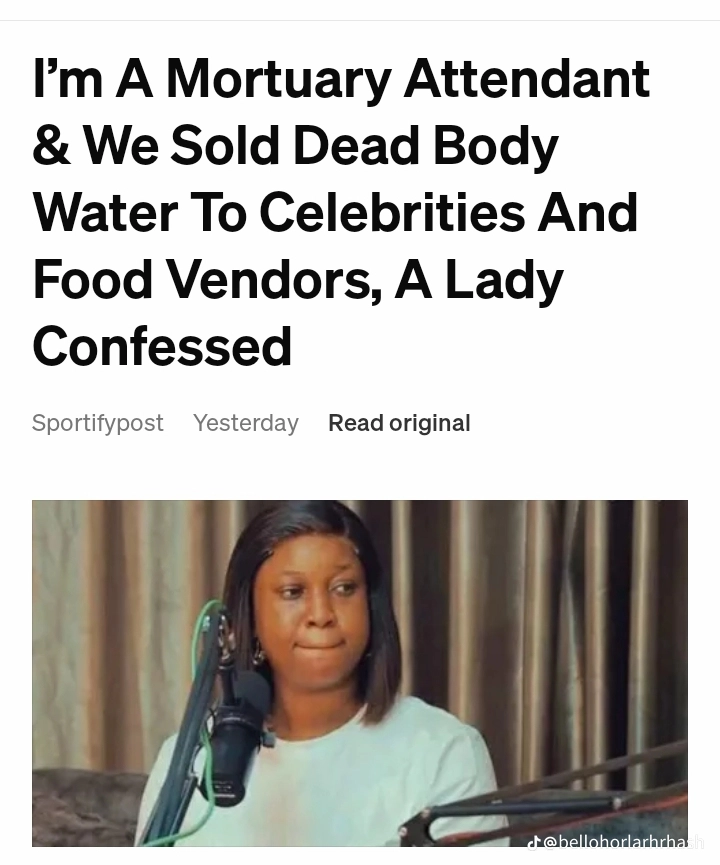
The viral confession of a mortuary attendant allegedly selling “dead body water” is more than just a shocking story it shows how quickly fear can spread when public trust in health and safety systems feels weak. Topics linked to death and contamination naturally trigger panic, and social media only amplifies that reaction.
If such an allegation were true, it would raise serious concerns about sanitation, regulation, and ethical standards in sensitive places like mortuaries. These spaces are meant to uphold dignity for the dead and safety for the living, so any breach would be both a moral and public health issue.
At the same time, the speed at which unverified stories circulate online reminds us how easily sensational claims can become “facts” overnight. Panic can damage livelihoods, especially for small vendors and innocent people who become targets of public fear without evidence.
This situation highlights two key needs: stronger oversight in critical sectors and more caution from the public before believing viral confessions. Fear spreads fast, but truth and responsibility should always come first.