On paper, being a food vendor in Nigeria looks simple: wake up, cook, set up a stand, sell, go home. But the real story sits somewhere between smoke from the frying pan, fuel scarcity wahala, and customers who want “extra meat but no extra money.”
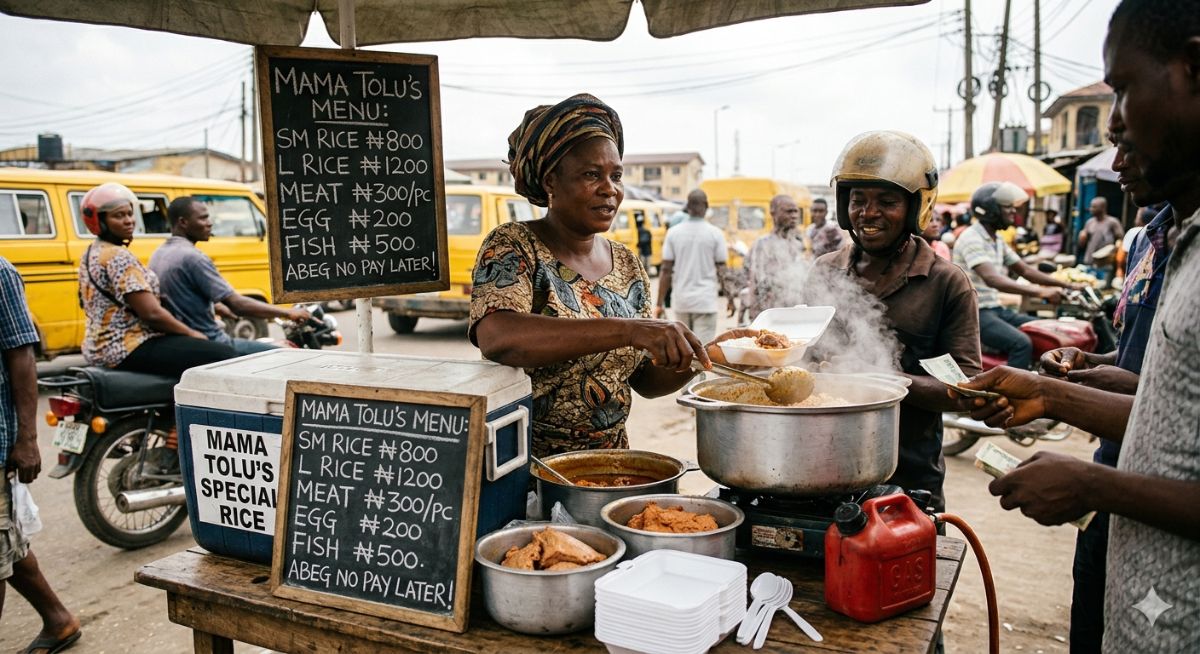
There’s a woman I’ll call Mama Tolu. She sells rice and stew by a busy junction in Lagos. Her day doesn’t start in the morning—it starts the night before.
By 9pm, while others are thinking of sleep, she is at the market negotiating prices like her life depends on it (because honestly, it kind of does). Tomatoes are up again. Pepper is “doing anyhow.” Gas is almost finished but charcoal is also expensive. She calculates, re-calculates, and still ends up adjusting her budget like a magician working with no tricks left.
By 4:30am, she is already in the kitchen. Not because she is over-ambitious, but because Lagos traffic will not wait for anybody’s stew to finish cooking. She washes rice with one eye half open, stirs stew with tired hands, and still finds time to check if salt is enough—because one complaint from customers can scatter your whole day.
By 7am, she’s outside. Table set. Cooler arranged. Steam rising like a small announcement: “Food is ready, come and survive your day.”
First customers arrive early—okada riders, office workers, students running late. Everyone is in a rush, but somehow still has time to negotiate:
“How much for small rice?” “Mama, abeg add meat small.” “Can I pay later? I know you know me.”
She smiles, because in this business, customer service is not optional—it’s survival strategy.
By midday, the real test begins. Heat is rising. Traffic is loud. And everyone suddenly wants “quick food” but still expects restaurant-level perfection at roadside price. She serves, refills stew, settles small quarrels about “who was before who,” and manages change like a cashier and accountant combined.
Then there’s the unseen hustle: fuel for the generator when NEPA decides to remind everyone who is boss. Spoilt ingredients risk. Rain that shows up uninvited. And days when sales are slow, but rent and food prices are not slowing down for anybody.
Yet, she stays.
Because in the middle of all the stress, there’s also pride. A student who says, “Mama, your rice saved my day.” A driver who eats and returns with “God bless you.” A regular customer who knows exactly how she likes her stew done.
By evening, she counts money—not profit yet, just survival check. Some days it’s enough. Some days it’s “tomorrow will be better.”
And when she finally closes, tired but not defeated, she already knows the next day will look the same. Different faces, same hustle.
But that’s the thing about food vendors in Nigeria: they are not just selling food.
They are selling endurance, consistency, and small daily miracles that keep everyone else going.