Chijioke and Uche had always known the village would one day feel too small for them. From the time they were children, playing in the red dust of their rural hometown in Enugu, they’d dreamt of something bigger — something that didn’t involve long hours tending to cassava fields or spending afternoons chewing sugarcane by the roadside. They wanted the city. They wanted a chance to prove they were more than just products of their land.
Their village was quiet, peaceful, almost idyllic in its simplicity. But it was also a place where dreams went to die, buried beneath the weight of poverty and tradition. The elders often spoke of the city as a place for those who had “succeeded,” where opportunities abounded. But no one ever really seemed to leave. And for the few who tried, most came back in shame, with nothing but the dust of failure on their shoes.
Chijioke and Uche were different. They were the ones who didn’t settle for “good enough.” Even when their families, tired of seeing them restless, tried to push them into becoming farmers like everyone else, they held on to their dreams. They’d seen the few who left the village return, often with enough money to build houses, send their children to school, and change their lives. The city, for them, was the promised land.
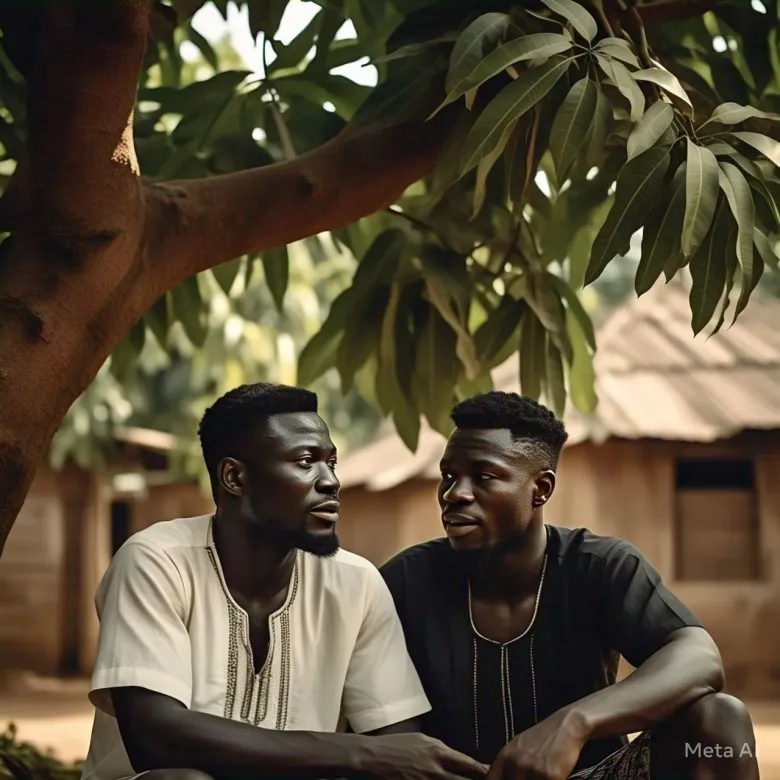
It was late afternoon when they sat under the big mango tree at the edge of the village, as the sun began its descent. The air was warm, thick with the sounds of village life — the distant chatter of women at the water well, the rhythmic beats of a metal gong summoning people to evening prayer.
“You sure about this, Chijioke?” Uche asked, squinting into the sun. His face was hard, but there was a slight tremor in his voice that betrayed his nerves.
Chijioke sat back, chewing on a stalk of sugarcane, his eyes fixed on the horizon. The thought of leaving the village had been with him for years, but now, it felt different. There was a finality in the way Uche asked.
“I’m sure. It’s now or never. We’ve been talking about this for too long,” Chijioke replied. “We’ll make it. Even if we have to start from scratch, we’ll make it.”
Uche nodded slowly, though his fingers drummed nervously against the ground. The decision had come quickly, but it still felt like they were jumping off a cliff, unsure whether there was a net to catch them. They had no jobs lined up, no family in the city to fall back on. They would be walking into the unknown. But, then again, hadn’t they always wanted more?
“I’m with you, Oga,” Uche said, forcing a smile. “Let’s go and show them what we’re made of.”
The next morning, they stood at the bus stop, their few belongings packed in bags, each of them clutching a small amount of money that had been saved over years of scrimping. Their parents had offered to buy them a goat for the journey, but they had politely declined. They didn’t need another reminder of the life they were leaving behind. All they needed now was the city and the promise of something new.
The bus ride was long, cramped, and uncomfortable. But every mile that passed felt like progress. As the bus made its way through the winding roads, Chijioke stared out the window, his mind filled with the images of Lagos — the city of opportunity, the city that never slept. The city where every street corner could lead to a chance to build something bigger than what they had in the village.
By the time they arrived at the city, night had fallen. The streets were alive with the noise of traffic, the bright lights of the cityscape casting a neon glow on everything. The air smelled different — pungent, but filled with energy. It was unlike anything they had ever known. The village, with its slow pace and familiar faces, seemed like a distant memory.
“Welcome to Lagos,” Chijioke muttered under his breath.
(To be Continued)