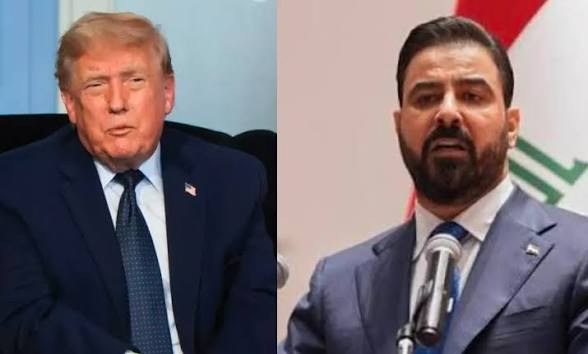
United States President Donald Trump is set to welcome Iraqi Prime Minister Ali al-Zaidi to the White House in July, in a visit that both sides say will focus on the future of the US-Iraq relationship and the fate of powerful armed groups operating outside Baghdad’s control.
The visit was announced in a joint statement from the Iraqi leader’s office and the US embassy in Baghdad, following talks in the Iraqi capital between al-Zaidi and Trump’s special envoy to Iraq, Tom Barrack. According to the statement, Barrack conveyed that Trump “looks forward to welcoming Prime Minister Al-Zaidi to the White House mid-July to discuss the future of this important relationship.”
The planned meeting underscores Washington’s continued interest in shaping Iraq’s security and political trajectory after years of conflict, foreign intervention, and internal division. US officials have long pressed Baghdad to rein in or dismantle militias and other armed factions that operate outside the formal chain of command, many of which are backed by regional powers and have become deeply entrenched in Iraq’s security landscape.
During his visit to Baghdad, Barrack held detailed discussions with al-Zaidi on disarming and dissolving these groups, Iraqi officials said. The issue has become a central test of the Iraqi government’s authority, as it seeks to assert state control while avoiding a direct confrontation that could destabilize the country or ignite fresh violence.
The White House talks are expected to cover a broad agenda: the future of US military assistance and training, cooperation against extremist networks, economic support for Iraq’s reconstruction, and Baghdad’s efforts to balance its ties with both Washington and neighboring Iran. Analysts say the meeting will offer Trump and al-Zaidi an opportunity to signal how closely aligned they are on these sensitive questions.
For Iraq, the visit is also a chance to reassure international partners that it is committed to building a sovereign state with a unified security apparatus. For the United States, it is an opportunity to reaffirm its influence in Baghdad at a time when regional rivalries and domestic pressures in both countries are reshaping policy choices.