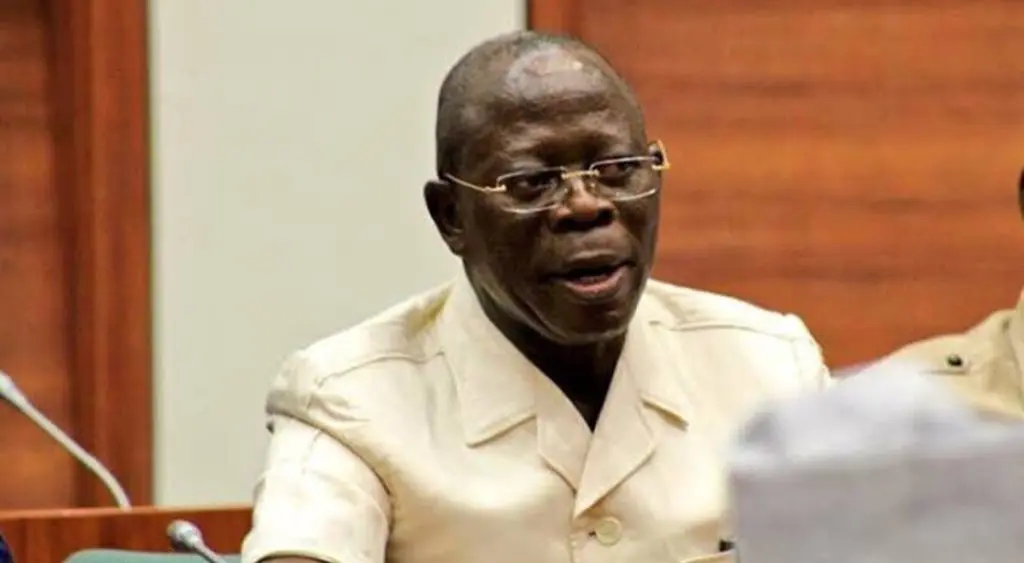
Senator Adams Oshiomhole has offered a stark and personal account of how his tenure as national chairman of the All Progressives Congress ended, alleging that he was removed from office through a virtual meeting held inside the Presidential Villa.
Speaking in a televised interview, the former Edo State governor said his ouster was not the result of an open political contest, but of a remote-controlled process that began with a petition from his ward and culminated in a National Executive Council session conducted on Zoom.
Oshiomhole recalled that he had been central to the APC’s rise to power, insisting that his stewardship helped deliver victory to Muhammadu Buhari in the 2015 presidential election and later stabilised the party’s internal structures.
He said he and members of the National Working Committee worked behind the scenes to resolve leadership tussles in the National Assembly, ensuring that both the Senate and House of Representatives produced presiding officers acceptable to the party without forcing Buhari into public political battles.
According to him, the party hierarchy relied on the NWC to “do the marketing, explanation and persuasion” required to manage competing interests in a young ruling party. That effort, he argued, allowed the president to remain above the fray while the party machinery handled negotiations and power-sharing.
Oshiomhole maintained that once the APC appeared stable, forces opposed to his leadership turned to technical manoeuvres. He said a petition purportedly signed by eight members of his ward was used to secure an interim court order suspending him from office on the grounds of a vote of no confidence.
He explained that he challenged the decision in court and initially won on appeal, only for the same Court of Appeal to reverse itself weeks later and restore the suspension, a judicial twist he described as unprecedented in his political experience.
The final act, he said, was a National Executive Council meeting convened virtually from the Presidential Villa, during which his removal was formalised. For Oshiomhole, the manner of his exit underscored the extent to which internal party battles had shifted from open political contests to legal and procedural ambushes conducted far from the party’s grassroots.