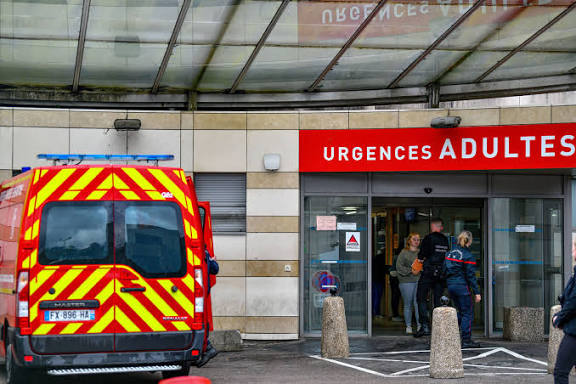
Medical staff at Rangueil Hospital in Toulouse, southern France, were forced to call in a bomb disposal unit after discovering a World War I artillery shell lodged in a young man’s rectum.
The patient, identified by French media as a 24-year-old man, arrived at the hospital’s emergency department complaining of intense abdominal and rectal pain. According to local reports, he told doctors he had “introduced an object” into his rectum but did not initially specify what it was.
During examination and imaging, clinicians realised the foreign body was not a common household item but a metallic object resembling a shell. It was only at the moment of extraction that the full extent of the risk became clear.
Police sources quoted in regional newspaper La Dépêche said the surgeon recognised the object as an artillery shell dating back to the First World War, measuring roughly 16 centimetres in length and 4 centimetres in diameter. Confronted with the possibility that the shell might still be live, hospital staff immediately triggered emergency protocols.
Authorities were alerted and police arrived at the hospital in the early hours of the morning, quickly summoning a specialist bomb disposal team. A security perimeter was established around the affected area of the hospital, and some staff and patients were temporarily moved while explosives experts assessed the situation.
Firefighters were also deployed as a precaution, standing by to respond to any potential explosion or fire during the intervention. The presence of a century-old munition inside a patient posed an unusual challenge, combining medical risk with the possibility of an explosive hazard.
After careful inspection, bomb technicians determined that the shell dated from the late stages of World War I and had been decommissioned. It no longer contained active explosive material and therefore did not present a danger of detonation.
The patient was successfully treated and remains under medical observation. No injuries to hospital staff or other patients were reported. The Toulouse prosecutor’s office has opened an investigation to clarify how the man obtained the shell and the exact circumstances that led to its insertion.
The case has drawn widespread attention in France, highlighting both the enduring physical legacy of World War I munitions and the increasingly complex situations faced by modern emergency departments.



