The Tory Burch fall/winter 2026 collection was presented at the Breuer building on the Upper East Side, currently occupied by Sotheby’s. The show reinforced the designer’s position as a central figure in the New York fashion landscape, with a front row that included Amanda Seyfried, Tessa Thompson, Pamela Anderson, Jeanne Damas, and Mary Beth Barone. The overall positioning targeted a consumer who moves between downtown and uptown environments and seeks a cohesive, recognizable wardrobe.
The collection drew partial inspiration from horticulturist and philanthropist Bunny Mellon and was framed around the idea of women dressing by instinct rather than by strict rules. In practical terms, this translated into garments designed to integrate easily into existing wardrobes, emphasizing wearability over purely conceptual runway impact.
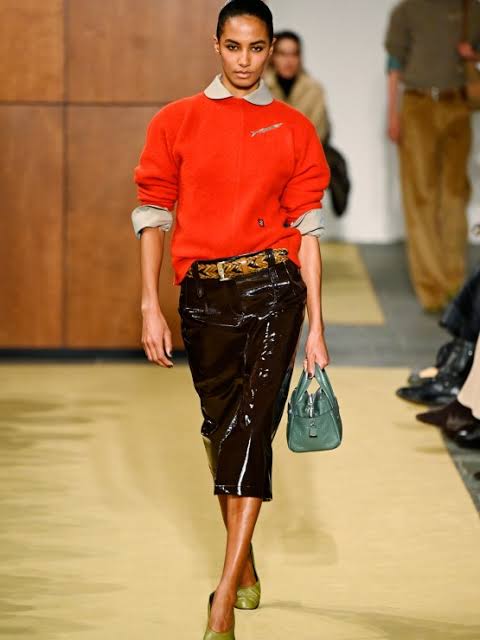
One of the most prominent elements was the braided leather belt. It appeared across a wide range of looks, used to define the waist on coats, dresses, and knitwear. Functionally, this accessory served as a unifying styling device, adding structure and a subtle vintage reference without introducing excessive ornamentation.
Another key development was the use of cool gray leather as an alternative to standard black and brown. This material and color combination was applied to pencil skirts and streamlined footwear. The effect was to maintain classic shapes while introducing a more contemporary, almost architectural visual language, positioning gray leather as a potential new core neutral in the brand’s palette.
The collection also highlighted cigarette trousers, indicating a shift away from the wide-leg silhouettes that have dominated recent seasons. These trousers were cut slim and ended at the ankle, aligning with the ongoing popularity of cigarette jeans while remaining compatible with professional dress codes. Styled with tailored outerwear and softer knitwear, they offered a more fitted option within the broader tailoring category.
Dresses, a consistent category for the brand, were shown with drop waists that referenced both 1920s and 1980s proportions. Variations included halter, fitted styles and looser, long-sleeved versions. Across these designs, the common denominator was an elongated, relaxed silhouette, providing an alternative to the empire and babydoll shapes that have been prevalent in recent collections industry-wide.
Peter Pan collars were reintroduced in a more structured, mature format. Often layered under oversized knits, they functioned as a controlled, nostalgic detail rather than a juvenile motif. This approach positioned the collar as a subtle tool for adding formality and visual focus near the face.
Jewelry was aligned with this restrained but character-driven direction. Sardine pins and pendant necklaces in silver and muted gold were attached to knitwear and dresses, incorporating a marine reference without resorting to overt novelty. These pieces operated as compact, repeatable styling accents rather than statement jewelry.
A vivid orange appeared consistently throughout the collection and served as a key color story. Used on outerwear, dresses, and accessories, it extended a hue already present in the brand’s spring offering. The repeated deployment of this shade suggested a strategic attempt to normalize bold color as a functional part of a core wardrobe, contingent on precise cuts and controlled styling.