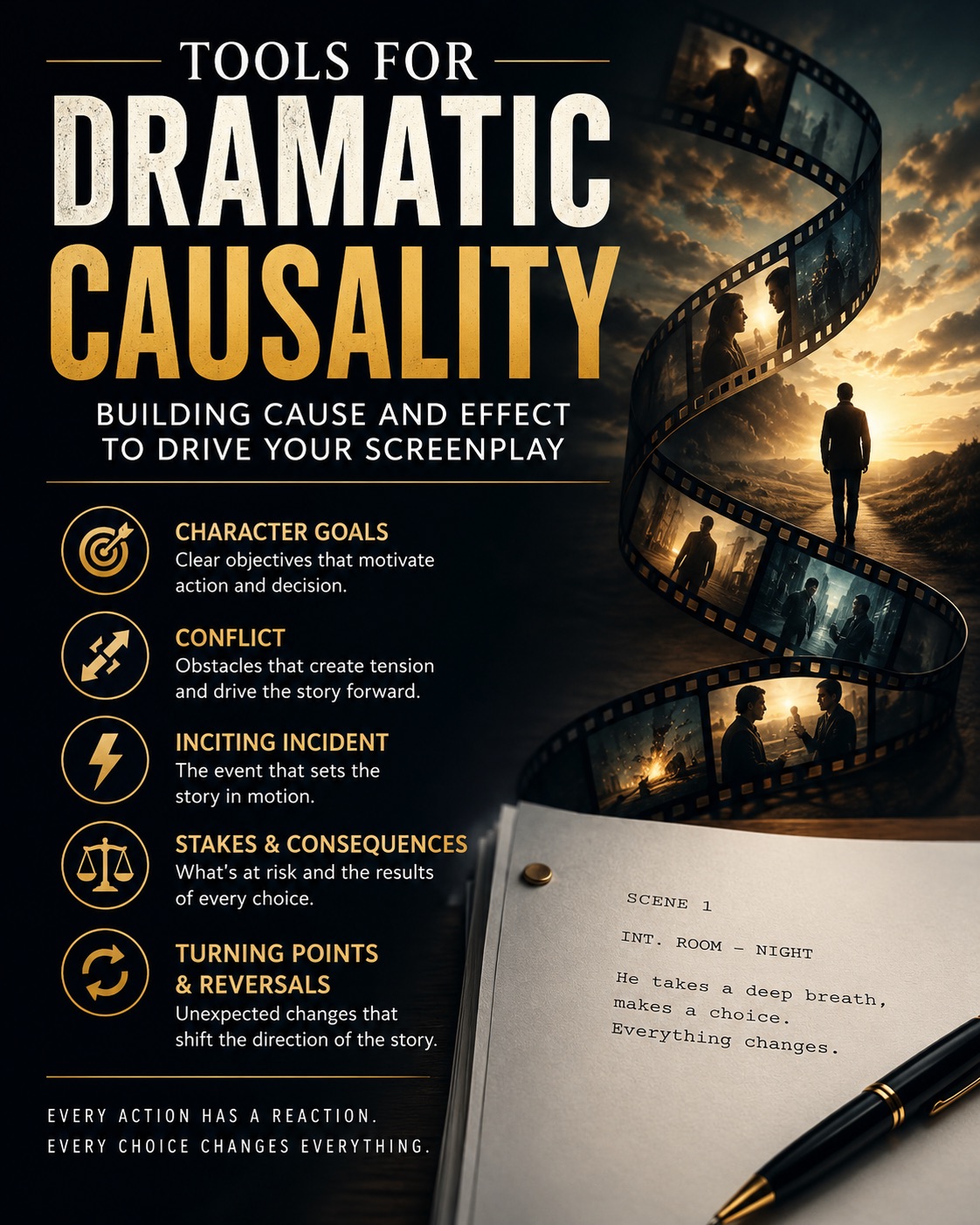
Dramatic Casualty
Discuss five tools that are important in developing dramatic causality for progressing your screenplay
Dramatic causality means the relationship between cause and effect in a screenplay. It means that every action or event in the story leads to another event, making the story move in a logical and interesting way.
1. Character
Characters are important because their decisions and actions create events in the story. A screenplay progresses when characters want something and take steps to achieve it.
Example:
A student wants to win a scholarship, so they study hard and compete with others. Their actions create new situations in the story.
Importance:
Characters make the story active and help events happen naturally.
1. Conflict
Conflict is the struggle or obstacle that prevents a character from achieving their goal. It creates tension and gives the audience a reason to stay interested.
Example:
A young musician wants success but lacks money and support.
Importance:
Conflict pushes characters to act and creates consequences that move the plot forward.
1. Plot
Plot is the arrangement of events in a screenplay. Good plotting ensures that one event leads to another.
Example:
A character loses an important document → searches for it → discovers a hidden truth.
Importance:
Plot gives structure and ensures the story develops through cause and effect.
1. Dialogue
Dialogue is what characters say to each other. Through dialogue, information is revealed, emotions are expressed, and decisions are made.
Example:
A conversation reveals betrayal, causing another character to leave.
Importance:
Dialogue helps move the action forward and develops relationships.
1. Suspense
Suspense creates curiosity and keeps the audience interested in what will happen next.
Example:
A character receives a warning message but ignores it.
Importance:
Suspense encourages continuous progression and keeps viewers emotionally connected.
Character, conflict, plot, dialogue, and suspense are important tools in developing dramatic causality because they connect events through cause and effect. They help a screenplay progress smoothly and keep the audience engaged from beginning to end.



