Being a queen bee with issues? Nobody wants that. In all American high school movies, there’s always that blonde girl, the cheerleader head, wearing the prom crown, aiming to be homecoming queen, with two sidekicks I call the “police dogs.”
Back to my story: that blonde girl acts like her life is perfect, but guess what? She has so many issues you wouldn’t trade your life with hers. The same goes for the real queen bee not the human one, but the animal queen, the ruler of a hive, who wears the crown, commands attention, and has every bee looking up to her.
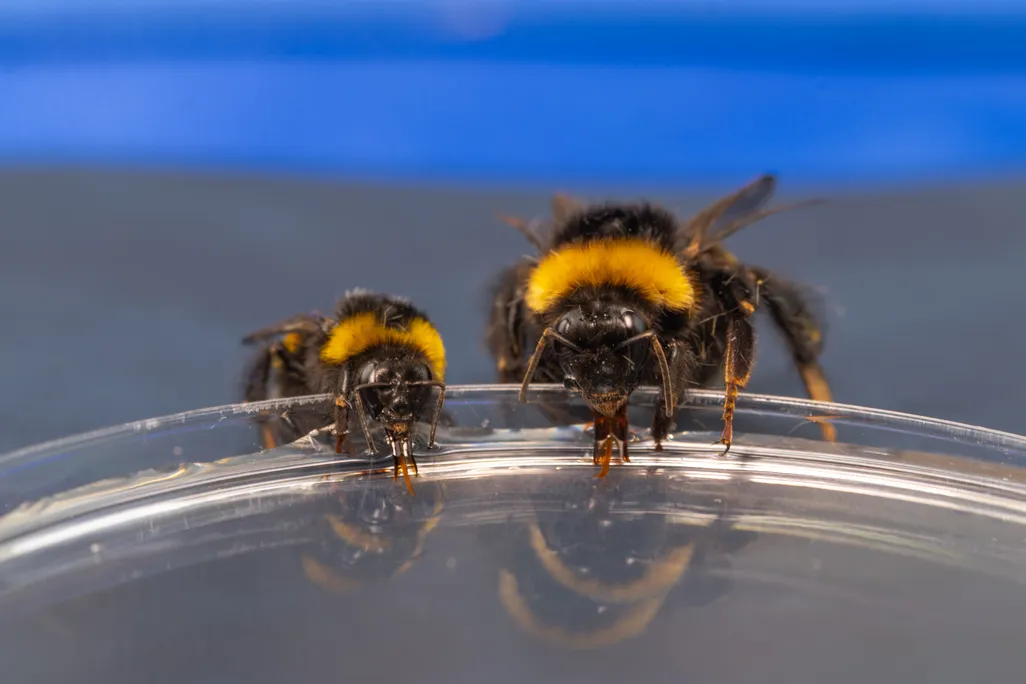
But there’s a problem: when it comes to gathering nectar, she’s terrible. That’s exactly what scientists recently discovered about queen bumblebees.
Researchers found that queens, unlike their worker counterparts, are poor foragers (foragers are the bees who go out to collect nectar and pollen). Their long tongues, which you might think help them sip nectar easily, actually make it harder to feed efficiently.
The result? Workers do most of the heavy lifting to keep the hive fed. More work for them, while the queen still gets the crown.
At first glance, it might seem like a tiny detail, a few hairs on a bee’s tongue but small details can have big consequences. This discovery helps scientists understand how bee colonies operate, how traits evolve, and how ecosystems stay in balance. After all, bees are vital pollinators, and every tweak in their behavior can ripple through nature in unexpected ways.
To study these queen bees, scientists used tiny trackers, cameras, and observation tools that make watching the bees more precise than ever. These technologies allow researchers to track which bees visit flowers, how long they forage, and how they interact with other members of the hive. Insights like these could one day help farmers and conservationists protect crops and maintain healthy ecosystems, a perfect example of how science and technology work together to solve real-world problems.
Just like in the movies, where the two sidekicks do the work while the queen stands tall, the real queen bee relies on her workers. But what happens when the sidekicks leave? In the high school movie, when the blonde girl mistreats them, they eventually walk away and suddenly she feels hopeless and helpless, realizing the crown alone isn’t enough.
We often assume the queen is the strongest or most capable, but in the world of bees, leadership doesn’t always mean efficiency. Sometimes, the crown is symbolic, and the real work is quietly done in the background.
In the end, the queen bumblebee teaches us a little lesson about perspective: power isn’t always about what you do yourself, it’s about how you organize, lead, and rely on others. And in nature, even the tiniest quirks, when studied with the right tools, can reveal big scientific stories.