Discuss the Major Forms of Traditional Media in Nigeria
Introduction
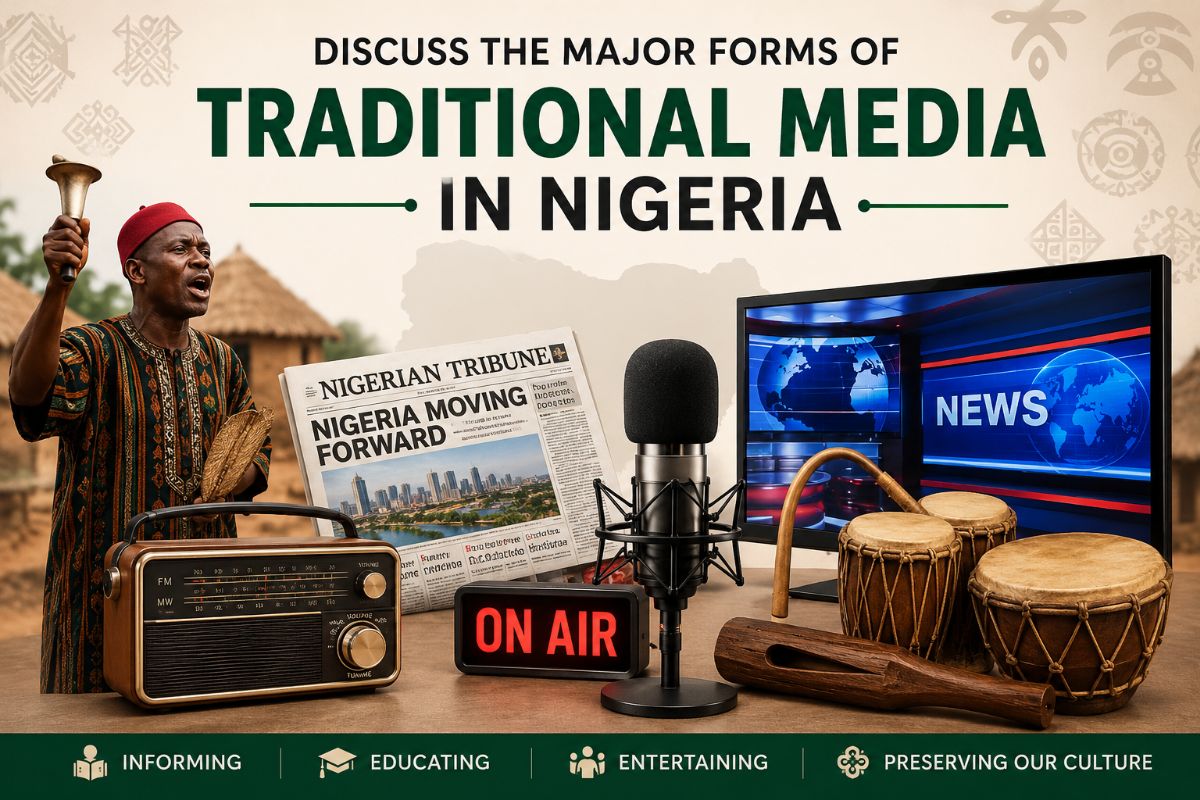
Traditional media refers to the conventional channels of communication that have been used to disseminate information before the emergence of modern digital and social media. In Nigeria, traditional media has played an important role in informing, educating and entertaining the public. The major forms include newspapers, magazines, radio, television and indigenous or traditional media.
1. Newspapers
Newspapers are one of the oldest forms of modern mass media in Nigeria. They provide information about politics, business, education, sports, entertainment and other issues affecting society. Newspapers publish news reports, editorials, opinions, interviews and feature articles. They help citizens stay informed about events happening within the country and around the world.
2. Magazines
Magazines are another important form of traditional media. Unlike newspapers, which are often published daily, magazines are usually published weekly, monthly or at other regular intervals. They commonly focus on specific areas such as fashion, politics, business, health, entertainment, sports and lifestyle. Magazines provide detailed articles, interviews, photographs and features for their readers.
3. Radio
Radio is one of the most widely used traditional media platforms in Nigeria. It is relatively affordable and can reach people in both urban and rural areas. Radio programmes include news, interviews, discussions, educational programmes, advertisements, music and entertainment. Radio stations can also broadcast in English and various Nigerian languages, making it possible to reach different groups of people.
4. Television
Television is a powerful form of traditional mass media because it combines sound and moving pictures. Nigerian television stations broadcast news, documentaries, educational programmes, sports, advertisements and entertainment. Television helps people understand events through both visual and audio information. It also plays an important role in shaping public opinion and creating awareness about important national issues.
5. Traditional or Indigenous Media
Before the introduction of newspapers, radio and television, Nigerian communities had their own methods of communication. These are known as traditional or indigenous media. They include town criers, talking drums, village meetings, traditional rulers, storytelling, songs, dances, festivals and masquerades.
The town crier was traditionally used to make important announcements to members of the community. Talking drums, gongs and other instruments could also be used to attract attention and communicate messages. Storytelling, songs and proverbs were used to educate people, preserve history and pass cultural values from one generation to another. Village meetings and traditional rulers also helped communities make decisions and share important information.
Although modern technology has reduced the dependence on some of these methods, traditional media remains important in many Nigerian communities. They continue to help preserve Nigerian culture, customs, history and identity.
Conclusion
The major forms of traditional media in Nigeria include newspapers, magazines, radio, television and indigenous media. Each form has its own characteristics and functions, but they all contribute to informing, educating and entertaining society. Despite the rapid growth of the internet and social media, traditional media continues to play an important role in Nigerian society. It remains an important means of communication and a valuable part of the country's history and culture.