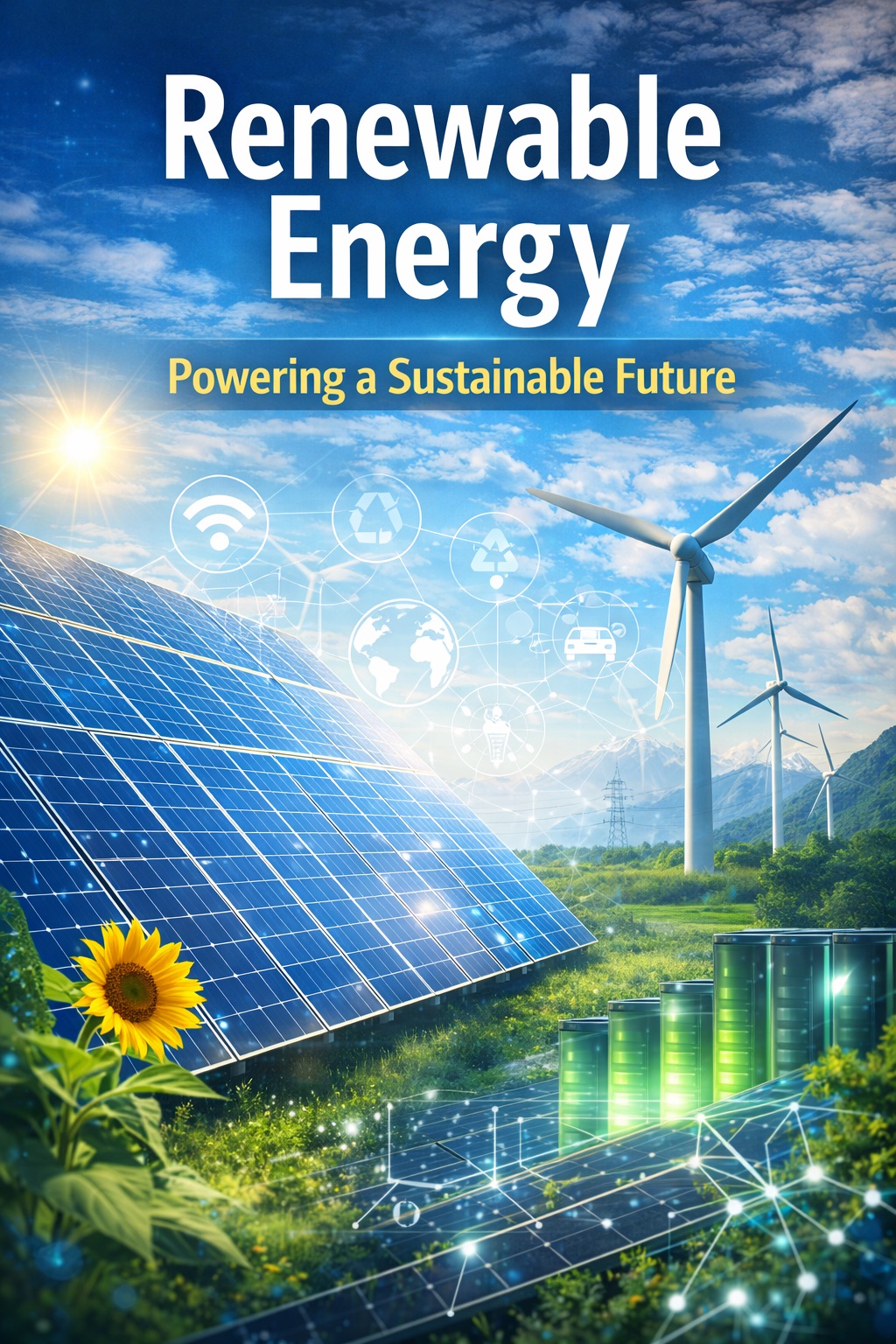
As global energy demand continues to rise, the need for sustainable and environmentally friendly energy sources has become increasingly urgent. Renewable energy represents one of the most significant scientific and technological advancements aimed at addressing climate change, energy insecurity, and environmental degradation. Unlike fossil fuels, renewable energy sources are naturally replenished and produce little to no greenhouse gas emissions.
Renewable energy is derived from natural processes that are continuously restored. The most common sources include solar, wind, hydroelectric, geothermal, and biomass energy. Among these, solar and wind power have experienced the fastest technological growth in recent years due to improved efficiency and decreasing production costs. Solar energy technology works by converting sunlight into electricity using photovoltaic (PV) cells. These cells capture sunlight and generate an electric current through a semiconductor material. Advances in solar panel design have significantly increased energy efficiency while reducing installation costs, making solar systems more accessible to households and businesses. Similarly, wind turbines convert kinetic energy from moving air into electrical power, providing a clean alternative to fossil fuel-based electricity generation. One of the major advantages of renewable energy is its environmental benefit. Fossil fuels such as coal and petroleum release carbon dioxide and other pollutants when burned, contributing to global warming and air pollution. Renewable sources produce minimal emissions, helping to reduce the carbon footprint of energy systems. This transition plays a crucial role in mitigating climate change and promoting public health. Economically, renewable energy also presents opportunities. The renewable sector has created millions of jobs worldwide in manufacturing, installation, maintenance, and research. In addition, decentralized energy systems—such as rooftop solar panels—allow communities to generate their own electricity, reducing dependence on unstable power grids and imported fuels.
However, renewable energy faces certain challenges. Energy storage remains a key issue, as solar and wind power depend on weather conditions. Advances in battery technology are essential to store excess energy for use during periods of low production. Infrastructure development and government policies also influence the pace of renewable adoption. Effective regulation, investment incentives, and technological innovation are necessary to ensure long-term success. Renewable energy is central to building a sustainable and resilient future. Through scientific research and technological development, renewable systems are becoming more efficient, affordable, and widespread. While challenges remain, continued innovation and supportive policies can accelerate the global transition toward cleaner energy systems. As societies strive to balance economic growth with environmental responsibility, renewable energy stands as a critical solution for powering the world sustainably.