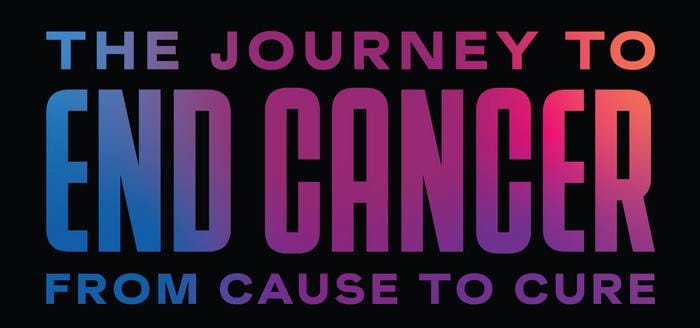
On March 7, The Health Museum in Houston opens its doors to a remarkable exploration of cancer science. Not the fear or statistics, but the biology, technology, and breakthroughs transforming how we understand and fight the disease.
The Journey to End Cancer: From Cause to Cure, presented by The University of Texas MD Anderson Cancer Center, begins its national tour in Houston before traveling to museums across the United States over the next five years. It turns museum spaces into immersive laboratories where visitors witness how cancer develops, how it is detected, and how cutting-edge research is shaping new treatments.
The journey begins at the cellular level. Every day, billions of cells divide and replicate their DNA.
Occasionally, errors occur. Mutations emerge. Most are harmless, but some can trigger cancer. The exhibition brings this process to life with vivid animations and interactive displays, allowing visitors to observe the transformation from healthy cells to malignant ones and understand how researchers identify these early changes.
Visitors step into the role of biological detectives. Interactive tools let them scan virtual organs, analyze molecular patterns, and discover how scientists detect early signs of cancer. One station highlights liquid biopsies, a revolutionary technology that identifies traces of tumor DNA in the bloodstream, enabling earlier and less invasive detection.
The exhibition also connects biology to lifestyle. Through data-driven interactive games, visitors explore how diet, exercise, and daily choices influence inflammation, gut microbiome health, and long-term cancer risk. Narrated by Dr. Jennifer Wargo, one experience demonstrates how fiber-rich foods shape gut bacteria and modulate immune responses, showing science in action in everyday life.
The journey then moves to the frontier of cancer treatment. In immersive media environments, visitors observe microscopic battles between immune cells and cancer cells. They see how immunotherapy retrains the immune system to recognize and eliminate malignant cells. Precision medicine, guided by genetics and patient-specific data, replaces one-size-fits-all treatments, highlighting the future of oncology.
Large-scale data visualizations chart trends in cancer incidence and survival, revealing progress and ongoing challenges. While overall mortality has declined by more than 30 percent since the early 1990s, some cancers continue to rise, underscoring the importance of research, prevention, and early detection.
Science is inseparable from the people behind it. Throughout the exhibit, researchers, clinicians, and survivors share personal insights, showing how laboratory discoveries translate into treatments and hope for patients. A dedicated reflection space illustrates the physiological impact of stress and how integrative therapies like meditation and yoga support recovery.
The Journey to End Cancer remains in Houston until September 13 before continuing nationwide. It invites visitors not just to observe, but to engage, learn, and envision a future where science and technology continue to redefine the fight against cancer.