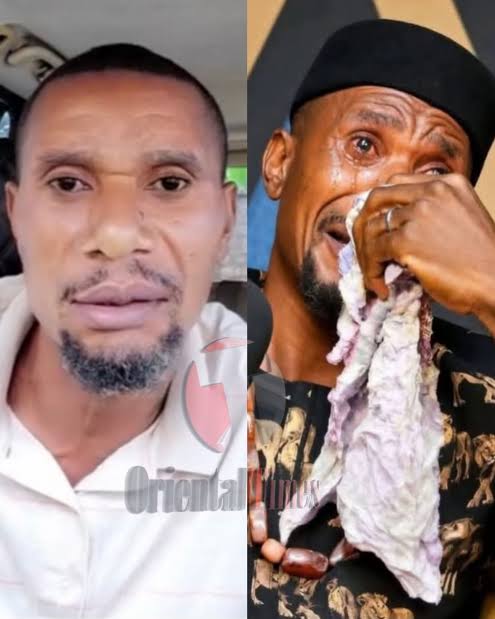
Emmanuel Obasi, the former husband of Nollywood actress Judy Austin, has condemned social media users who mocked him over the handkerchief he used while crying during a recent podcast, insisting that the real issue is his pain and his battle to see his children.
Obasi’s emotional interview, which has been widely shared online, revisited the breakdown of his marriage to Judy Austin. In the podcast, he alleged that Austin began a romantic relationship with actor Yul Edochie while still married to him, a development he says shattered their home and left him struggling to maintain a relationship with their two children.
According to Obasi, his attempts to remain in his children’s lives have been repeatedly frustrated. He claimed that Judy Austin has denied him access to the children, leaving him to rely on public appeals and legal efforts to be part of their upbringing. The emotional weight of these allegations led him to tears during the recording.
However, instead of focusing on his revelations and distress, a section of the online audience fixated on the worn handkerchief he used to wipe his tears. Memes and mocking comments quickly spread, ridiculing the fabric rather than engaging with his claims of betrayal and parental alienation.
In a follow-up video, Obasi responded sharply to the ridicule. He questioned why viewers chose to trivialise his suffering by focusing on a mere handkerchief, arguing that such reactions reflect a deeper insensitivity within the online community.
“What concerns my handkerchief with what I am crying about?” he asked, visibly frustrated. He stressed that his appearance and the condition of his handkerchief are irrelevant compared to the emotional trauma of losing his marriage and being separated from his children.
Obasi urged Nigerians to pay attention to the substance of his story: his allegations about how his marriage ended, his claim of being cut off from his children, and the broader issue of how public figures’ private lives can implode under the weight of infidelity, fame and social media scrutiny.
He maintained that his decision to speak out is driven by a desire for justice and access to his children, not by a quest for sympathy or online clout, and called on the public to show empathy rather than derision.