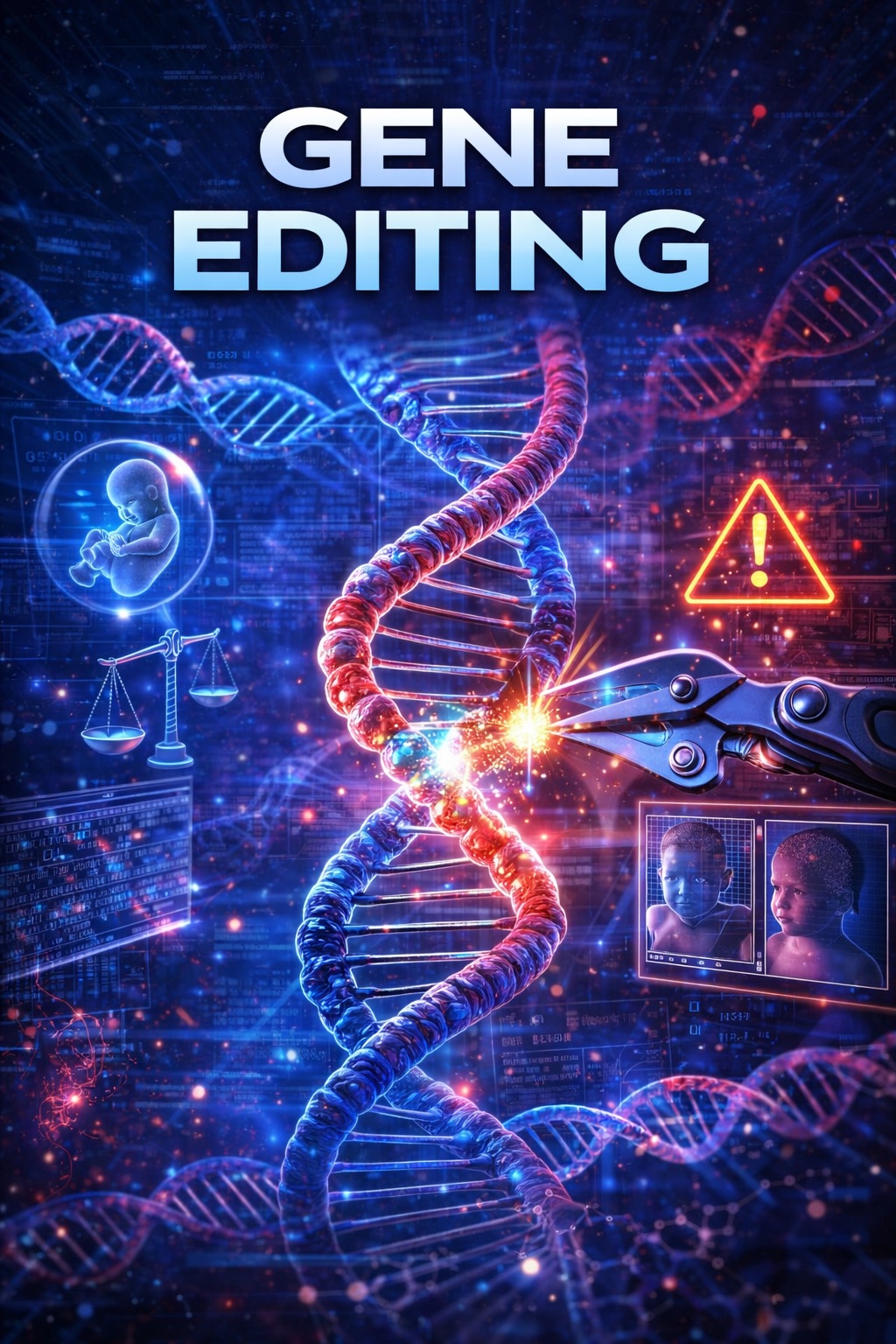
Among the most sensitive and rapidly evolving areas in science and technology is gene editing. Using tools such as CRISPR-Cas9, scientists can now precisely modify DNA sequences, effectively rewriting the genetic code of living organisms. This capability opens extraordinary opportunities for medicine, agriculture, and biotechnology, but it also raises profound ethical, social, and safety concerns.
CRISPR, short for Clustered Regularly Interspaced Short Palindromic Repeats, was adapted from a natural defense mechanism in bacteria. In 2012, researchers discovered that the CRISPR-Cas9 system could be repurposed as a programmable genetic scissor, capable of cutting DNA at specific locations. This breakthrough dramatically increased the speed, efficiency, and accessibility of gene editing compared to earlier technologies, such as zinc finger nucleases or TALENs.
The medical potential of gene editing is immense. Researchers are exploring CRISPR-based therapies to treat inherited diseases such as sickle cell anemia, cystic fibrosis, and certain forms of blindness. By repairing or disabling faulty genes, these interventions could potentially cure conditions that were previously untreatable. In agriculture, gene editing is being used to develop crops resistant to disease, pests, and climate stress, promising greater food security.
However, the technology’s power also brings ethical dilemmas. Editing the human germline—changes that are heritable by future generations—remains highly controversial. A single mistake or unforeseen consequence could propagate through generations, with unknown societal impacts. The case of a scientist in China editing embryos in 2018 ignited global debate about regulation, transparency, and the potential for “designer babies.”
Beyond ethical considerations, technical risks remain. Off-target effects, where CRISPR inadvertently alters unintended parts of the genome, can lead to harmful mutations. Long-term consequences of gene edits in humans and ecosystems are still largely unknown, underscoring the need for careful, transparent research.
Gene editing also intersects with social justice and global governance. Access to these technologies could exacerbate existing inequalities if only wealthy populations benefit from genetic enhancements. International bodies, such as the World Health Organization, are now considering frameworks for responsible use, emphasizing safety, fairness, and public engagement.
In essence, gene editing exemplifies the dual nature of modern science and technology: the ability to achieve unprecedented breakthroughs while facing equally unprecedented ethical and societal responsibilities. How humanity navigates this frontier will shape not only the future of medicine and agriculture but also the very definition of what it means to be human.
This micro story highlights that in the era of CRISPR, scientific advancement cannot be separated from ethical reflection, rigorous oversight, and global collaboration. The promise of rewriting life’s code comes with a weighty responsibility—a balance between innovation and caution.